Liberal journalism and the New York Times

On Sunday, the New York Times’s dry-as-dust "Week in Review" section

fronted a big

article by David Rosenbaum headlined "Bush May Have Exaggerated, but

Did He Lie?". The story looked at false statements by George W Bush, such

as "my jobs and growth plan would reduce tax rates for everyone who pays

income tax," or "intelligence gathered by this and other governments

leaves no doubt that the Iraq regime continues to possess and conceal some of

the most lethal weapons ever devised."

Rosenbaum concluded, however, that " In fact, a review of the president’s

public statements found little that could lead to a conclusion that the president

actually lied on either subject." It’s hard to see how Rosenbaum managed

to draw this conclusion, unless you take the stance that (a) you have to know

you’re lying for an untruth to be a lie; and (b) Bush is ignorant, and therefore

can’t be expected to know when he’s lying.

Tim Noah, in Slate, convincingly

argues that (a) Rosenbaum didn’t choose the most damaging statements from

Bush; and that (b) Bush should be held accountable for his statements anyway:

It’s often said that Bush has the virtue of self-awareness, that he knows

what he doesn’t know. That’s probably true. But if it is true, then Bush really

oughtn’t to go around making sweeping statements that he hasn’t made any effort

to verify. When these statements turn out to be untrue, Bush’s feigned certainty

alone justifies calling these statements lies. They may not be the sort of

lies a clever person (say, Bill Clinton) would tell. But there’s no reason

Bush can’t be thought of as both stupid and a liar.

There’s a meta-story here, though, as well, which Noah touches upon when he

says that "David Rosenbaum examined this question with a surfeit of post-Howell-Raines

fair-mindedness." Raines, the New York Times editor who resigned in the

wake of the Jayson Blair and Rick Bragg scandals, made enemies both in and out

of the newsroom by going on liberal crusades, such as running dozens of articles

on the fight to admit women into the golf club which hosts the US Masters. Raines

took the top job after running the New York Times’s op-ed page, a position which

naturally increased the attention paid to his political views.

Since Raines’s departure, it would seem, the Times has bent over backwards

to be seen to be impartial, objective, and in general the opposite of a crusading

newspaper. So when David Cay Johnston appeared on the front page of the paper

this morning with a story headlined "Very Richest’s Share of Income Grew

Even Bigger, Data Show", he made sure to include this bizarre sentence:

"Those numbers can be read to show that the wealthiest, as a group, carried

a disproportionate share of the overall tax burden — 1.6 percent of all

taxes, versus just 1.1 percent of all income — evidence that all sides

in the tax debate will be able to find ammunition in the data."

Johnston was looking at the amount of tax paid by the top 400 taxpayers in

2000, before any of the Bush tax cuts were enacted, and still he wrote something

that he surely does not believe, just to keep up the appearance of balanced

reportage. Even the most diehard conservative would probably find it hard to

assert that the very richest Americans were being disproportionately taxed if

they paid 1.6% of all taxes on 1.1% of all income. After all, these people made

an average of $174 million each in 2000, yet their overall income tax rate was

a very reasonable – if not astonishingly low – 22.3%. That’s much

less than many middle-class taxpayers have to shell out every year, and that

was under Clinton! Under Bush, the average tax bill for the top 400 earners

would be more than 20% lower still.

But obviously, the New York Times is no longer the place to look for campaigning

journalism, if it ever was. Its grand old franchise has been damaged, and it’ll

probably be a while before it once again allows itself to speak out on the news

pages when it sees injustice. The idea that journalism should comfort the afflicted

and afflict the comfortable has no place on 43rd Street right now.

Seth Mnookin of Newsweek explained in an

article yesterday that the Times cannot afford to go down that road:

When Raines pushed the paper to take a more activist stance on stories like

the exclusionary membership practices of the Augusta National golf club and

the march to war in Iraq, the outcry wasn’t just because a respected

newspaper was seen as tilting its news coverage. Reporters felt their paper

was being devalued. Readers felt their paper was deserting its objectivity.

Not all newspaper readers are media sophisticates, of course, so maybe it’s

understandable that some of them think that (a) there is such a thing as "objectivity"

in journalism; and that (b) the New York Times was doing the wrong thing by

deserting it. If such sentiments became widespread, then journalists could feel

that their paper was being devalued in the eyes of its readers.

But Mnookin goes further:

There are places in which it’s appropriate for a newspaper (even the

Times) to take an activist stand that has a real impact in the world. One

of those places is the Op-Ed page, where opinion columnists are given wide

latitude and leeway to obsess about and harp on whatever interests them that

day, week, month or year. Over the past year, one of the Times’ least-well

known Op-Ed writers has been on a crusade, and this month it resulted in an

extraordinary correction to a horrible miscarriage of justice.

Mnookin is referring here to Bob Herbert, who played a major role in reversing

a racially-motivated set of jailings in Tulia, Texas. What Herbert did was wonderful,

and admirable – but why should such activity be confined to the op-ed

page? Tulia was Herbert’s story: he broke it in the national press, and hounded

it incessantly until the falsely-jailed residents of that town were freed. But

other reporters come across such stories too: should the fact that they write

for the news pages rather than the op-ed section mean that their stories never

get the same treatment? Why should only columnists be able to crusade? After

all, as Mnookin notes:

Bob Herbert has been a Times columnist for a decade. He’s the only

African-American writer on the paper’s Op-Ed page, and he’s charged

with writing about politics, urban affairs and social trends. Unlike lightening

rods such as William Safire, Maureen Dowd or Paul Krugman, Herbert doesn’t

often engender virulent chat-room debates. And unlike Nicholas Kristof and

Thomas Friedman, Herbert isn’t flying to war zones and focusing on foreign

policy.

In other words, if you want an op-ed columnist to pick up your cause, you don’t

have many people to choose from: Thomas Friedman certainly isn’t going to do

it. Or, to put it another way, Bob Herbert is the one-man liberal crusader on

the New York Times. If he ain’t on it, it ain’t a crusade.

Actually, there are other crusading columnists on the Times: I approvingly

blogged one such piece by Michael Winerip, who has the education beat, only

a few weeks ago. But the broader point remains: columnists will badger their

own pet stories, but they can’t be expected to pick up someone else’s scoop

from the news pages. If the newsroom breaks something worth "flooding the

zone" on, to use Raines’s discredited concept, then the newsroom should

at the very least be allowed to keep the pressure on. (That’s something Raines

was bad at, actually: he spiked some investigative stories on the subject of

then-New Jersey senator Robert Torricelli, because he felt that the Times had

gone far enough already. It was other news organisations who ultimately claimed

Torricelli’s scalp.)

The departure of Raines is not necessarily a bad thing. But it would certainly

bode ill for American journalism if the new New York Times were to become an

anodyne repository of blandly "objective" reporting. The Republican

party has made a whole strategy out of spouting complete garbage with such volume

and conviction that the news media feel compelled to report

it as though it makes sense. Let us hope that the New York Times doesn’t

lose its respect for the facts along with its appetite for controversy.
Posted in Media | 5 Comments

Harry Potter and the cover artists

After posting a query

on Memefirst this morning about the different editions of the Harry Potter books,

I decided to create a little matrix of them all, to see how they compared. Here

it is; for the sake of saving bandwidth, I’ve used thumbnails for the first

four books, and slightly bigger pictures for the most recent one.

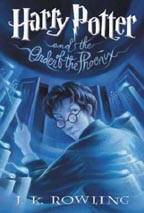
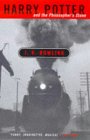
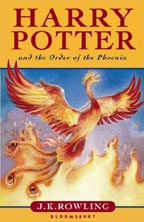
UK edition UK adult edition US edition

It’s clear to me that by far the best covers for these books are the last three

episodes of the UK children’s series. The first two are too childish: although

I do appreciate that they’re meant to appeal to younger readers, they don’t

feel like the timeless classics that they surely are. From the Prisoner of Azkaban

onwards, however, we’ve got beautiful covers: magical and appealing, just like

what’s inside.

The UK adult edition was, I think, basically a response to the weakness of

the first two children’s editions in the UK. You could definitely feel like

a bit of a willy reading those books in public, so Bloomsbury intelligently

brought the same books out with smart and sober covers for those of us over

the age of about 13. The first was better than the second, but by the time the

third book came out, the adult covers weren’t really needed any more, since

the children’s covers had grown up. Still, the series kept on going (once you’ve

started, it’s hard to stop) with a couple of rather peculiar dragons, which

weren’t up to the standard of the children’s books at all.

The latest version seems to have given up entirely: they’ve dropped the standard

design template for something which looks like a mass-market thriller: Robert

Ludlum, perhaps, or Frederick Forsyth. And again, the artist is much worse at

drawing phoenixes than the person who did the mainstream edition.

But the US editions, I think, are the worst of the lot. While the cover art

on books one and two in the UK was not very good, at least the rest of the design

was good. But the US publisher created a spiky Harry Potter logotype which they

decided had to be used on all of the books, and it got less and less appropriate

as the series progressed.

And while the UK editions only got better over time, the US editions got steadily

worse. The Goblet of Fire cover, especially, with its inanely-grinning Harry,

fails completely to convey the more grown-up nature of this book. With the Order

of the Phoenix, Scholastic seems to have realised that the series is actually

developing, and tried to reflect that by making the cover monochromatic!

Harry’s not smiling any more, but he seems to have fallen into a cheesy low-budget

haunted-house movie by mistake. And, of course, he’s still got his spiky logo,

looking more and more out of place.

I’d be very interested to know if there’s anyone who prefers the US covers

to the UK ones. I can see why Scholastic might want to use its own designers,

but does anybody think they actually did a better job? Vote now!

Free polls from Pollhost.com
Which Harry Potter covers are the best?

The UK children’s versions

The UK adult versions

The US versions


Posted in Media | 118 Comments

The economic policy of John Edwards

Eagle-eyed William Saletan, at Slate, posted a very useful heads-up

today about a key speech which Democratic presidential

candidate John Edwards gave on Tuesday at Georgetown University. Saletan gives

the Cliff’s Notes version, full of paradox and "audacity", and says

that "Edwards is trying to turn the traditional politics of left and right

upside down".

I’m not sure that I – or, for that matter, the Edwards campaign –

would completely agree with Saletan’s characterisation of the speech, but he

does perform a very useful précis, since the speech itself is long on

standard stump-speech rhetoric and isn’t that easy to read on screen (as opposed

to listen to in person).

But after reading them both, I think I’m close to considering myself an Edwards

supporter. Certainly, there’s a lot more meat here than in any dozen Howard

Dean speeches, which are full of grand phrases designed to fire up urban left-liberals,

but which are ominously light on policy specifics.

The substantive part of the Edwards program is basically to cut taxes on earned

income, while raising taxes (or, more precisely, repealing tax cuts) on unearned

income. Here’s an excerpt from the speech:

First, I will ask Congress to cancel the 2001 and 2003 income, dividend, and estate

tax breaks for the wealthiest Americans in the upper two brackets. In these

times of national sacrifice, we should not be asking less of the most fortunate.

I agree with Bill Gates, Sr., the father of the richest man in America, that

in a world where taxes must be paid, the people who inherit massive estates

ought to pay taxes too. I agree with Warren Buffett, the shrewd investor and

another of America’s richest men, who said that something is deeply

wrong when a billionaire has a lower tax rate than his secretary.

Second, I will give America a tax code that rewards work, not wealth. Today,

middle-class families pay income tax on their earnings at a rate of up to

25%, plus another 7.65% in payroll tax. Yet under the law President Bush just

signed, a CEO who pays himself whatever he wants can sell millions of dollars

in stock and pay tax at a total rate of 15%.

It’s hard to argue with that, although I’m sure that should Edwards get the

nomination, cries of "class warfare!" will start ringing out from

the GOP. Edwards is certainly going to have to make sure he’s a lot more specific

about who, exactly, "the wealthiest Americans in the upper two brackets"

are, since vastly more Americans think they’re in the top x% of the

population than actually are.

So Edwards should be very specific, making sure that he’s specifying incomes

over $350,000 a year, and estates over $6 million. Even then, many Americans

are going to be suspicious of such talk, since even if they’re not in that wealth

bracket now, they think (erroneously) that they will be very soon.

The key part of the speech which Edwards should concentrate on, then, is the

bit where he’s giving help and tax credits to the working poor and the lower

middle class. A $5,000 tax credit towards buying a home? That’s something people

can understand. Likewise making the first $1,000 of capital gains and $500 of

dividend income tax-free: an easy way of increasing the abysmally low (in fact,

negative) savings rate of the working classes. Best of all, Edwards proposes

a dollar-for-dollar match for retirement savings up to $1,000 a year.

I honestly believe that much of the Republican Party never even thinks about

such policies, even to reject them, because they’re in a comfortable middle-class

mindset which considers $500 of dividend income or $1,000 of retirement savings

to be negligible. Edwards should make them realise that there are millions of

Americans for whom such sums are anything but negligible, and that those Americans

are just as important and powerful as the richest plutocrats on one crucial

day every fourth November.

Edwards is right to make people realise that while the Bush administration

is passing enormous tax-cutting bills, most people aren’t seeing any of it.

Their federal income taxes might be down a little bit, but their state taxes

are rising, their city, property, and sales taxes are rising, their health-insurance

and college-education costs are rising: all these things mean that despite the

tax cuts, they have less disposable income now than they did before the Republicans

came in to office.

And it goes without saying that Edwards’s emphasis on fiscal responsibility

is a refreshing sign of sanity.

He’s clearly got a pretty solid grasp of basic macroeconomics, too. His policies

might well decrease investment from people with significant unearned income,

but they will increase investment from working people, with probably a small

positive effect on total savings. More importantly, while the big-picture numbers

might not change much (GDP, inflation, that sort of thing), Edwards would be

helping out the poorest members of society and giving workers much of the fruits

of their productivity gains which have gone overwhelmingly to their bosses until

now. That should help make America a more equitable, not to mention safer, place.

But while I agree with Edwards, I disagree with Saletan, or at least with part

of his spin. Saletan seems to think that talk of the wonders of capitalistm

is a naturally Republican domain, and that the Democrats are venturing into

new territory by attempting to show that they’re actually more capitalist than

their rivals.

While this might have been true ten or 20 years ago, I can’t see how it’s true

now. The past three presidencies have demonstrated beyond a shadow of a doubt

that when it comes to government finances and the economy, the Democrats do

much better than the Republicans. Just as Blair and Brown have been better economic

managers than Major was, it seems completely natural to suppose that Bush’s

opponent in the next election – whomever he might be – will run

America much more efficiently, on a purely capitalist level, than Bush is doing

right now. It’s hard to overstate the fiscal devastation that Bush is wreaking

right now, and if he’s allowed to carry on down this path for four more years,

he could hobble the economy to a point where the best-willed successor in the

world could not repair the damage.

Doesn’t Saletan remember Clinton’s famous slogan from 1992, "it’s the

economy, stupid"? That worked then, and it’s likely to work again now.

Americans like the idea of huge tax cuts, they just don’t like it when they

realise that most of the money is going to people who barely even notice it,

they’ve got so much to start with. Let’s direct tax cuts where the extra money

will be spent, stimulating the economy, rather than directing them where the

money will be put into Swiss bank accounts. Let’s use tax cuts as a means to

an end, and not as an end in themselves, and judge their success by how well

they help achieve those ends.

And let’s get the word out that it’s not audacious or topsy-turvy to say that

a vote for the Democrats is a vote for small business, private enterprise, and

lower taxes on earned income. It simply reflects the realities of what Washington

has become in the first years of this century.

Posted in Politics | 2 Comments

Paying friends

Back in my protoblogging days, in March 2000, I posted an item

on the old, low-tech felixsalmon.com disagreeing with a certain piece

of advice given by Slate’s agony aunt, Dear Prudence. I don’t know what

it is about Prudence which makes me want to respond to her columns, but she’s

gone and done it again today, with an answer to a question about a couple who

are starting up a B&B. They want their friends and family to come and stay

– and pay; Prudie responds

by saying that

As for what Prudie would do, she would try to arrive at an honest answer

to the question of whether or not she wanted to help her friends, financially,

without any ambivalent feelings. And if the answer turns out to be "no,"

they might catch on that the invitation didn’t seem very friendly.

I’m not entirely sure I understand this, but the gist is clear: friends don’t

ask friends to pay for lodging. I disagree.

If you’re going to spend money, say I, better you spend it on your friends.

Let’s say you need to buy a wedding present. You can bring up the wedding list

online and order a china plate from a department store, or you can commission

a painting from your talented artist friend Joanna Fox. No competition. One’s

personal, and the money stays within your circle of friends; the other is antiseptic

and a little too close to simply writing out a cheque. (The dirty secret of

wedding lists, of course, is that much of the time the gifts can be returned,

unopened, for store credit or even cash.) To try to get out of paying for the

painting would be cheap and nasty behaviour.

Similarly, if you’re going to stay in a B&B, surely it’s better to stay

in your friends’ new house than to give your money to someone you don’t know

and will never see again. Refurbishing old houses and operating them as B&Bs

is an expensive and risky business, and it’s good to support your friends when

they embark upon such a venture.

People like getting things for free. If their friend writes a book, they expect

a free copy; if they open a bar, they expect free drinks. It’s as though they

value the things their friend sells less than they value similar items from

complete strangers. Why is that? People should actively seek out opportunities

to spend money on their friends’ products and services, not feel aggrieved at

having to do so.

Moreover, in the case of a B&B, there’s a real opportunity cost to putting

your friends up for the night: if you’re not charging them for their room, then

you might be foregoing income from a paying guest. If your friends ask to stay

over a certain weekend and they offer to pay the going rate, then you can accept

them with open arms and have a great time together. But if they expect you to

comp their visit, and then someone else asks to book the room for those dates,

you’re out some very useful cash.

In general, if someone makes money from a certain activity, it’s verging on

the rude to expect them to give it to you for free just because you’re a friend.

Some people get this more than others, of course: lawyers and computer technicians

are always being asked for free advice, while court stenographers are very rarely

asked if they’ll do their friends a favour and sit down and take some dictation.

At least in these cases, however, the person concerned isn’t giving up income

to help out a friend.

The fact is that when you turn your house into a B&B, the old rules of

having people over to stay no longer apply. If a friend stays with me in New

York, the cost to me is marginal; if a friend stays in my B&B, they’re availing

themselves of a valuable service for which I normally charge money.

But maybe some people feel uncomfortable paying their friends money: they think

it might cheapen or commercialise the friendship. In that case, I would advise

Mary, the person who asked the question, to see if the owners of the B&B

have a favourite charity to which she could donate the cost of the room. That

way, there’s no implication that the hosts are being paid to simply do what

friends normally do, but there’s also an acknowledgement that a valuable service

is being provided, and that the guest is supportive of the way in which her

friends have chosen to try to make ends meet.

In any case, I think it’s definitely stretching to accuse these B&B owners

of not being good friends, just because they want to run their new business

as a business. Especially considering that at the beginning, at least, most

of their visitors will be friends and friends-of-friends, it could be financial

lunacy to start giving away rooms which they need to pay the mortgage.

That said, there’s a limit to spending money on friends. If the room rates at the B&B are exorbitant, and Mary would never normally spend that much on such a service, then she shouldn’t do so just because it’s her friends offering it. And if Joanna Fox started selling her paintings at prices I could no longer reasonably afford, then it would be perfectly reasonable of me to stop buying her paintings. But I don’t get the impression that there’s such a disconnect here: what we’re talking about is the principle at stake, not the cash.

Posted in Culture | 5 Comments

Cryptic crosswords

Many months ago, my grandmother told me that I should read a short book she’d

just finished. We were on the telephone at the time, and it took a while for

me to get the title straight: Pretty

girl in crimson rose (8) is pretty unique as the name of a book. The

book itself is pretty unique, too.

I can tell you this now, because I’ve finally finished reading it. It’s taken

a long time, but not because the book is a hard slog. Quite the opposite, in

fact: I brought it home from the library less than 24 hours ago. The problem

was that so many other people wanted to read this book that I had to wait a

long time to get to the top of the New York Public Library’s waiting list.

I have a feeling that Pretty girl in crimson rose (8) is one of those

books which is much more popular among the library-going population than it

is among the general public. It’s a memoir built around a theme of cryptic crosswords,

and without that theme it would be thin and meaningless to the point of evanescence.

The author, Sandy Balfour, has certainly had an interesting life: after fleeing

South Africa at the age of 21 in 1983 in order to avoid military service, he

hitchhiked with his girlfriend to London, where he settled down, started a family,

and became a successful producer of television news. He’s travelled all over

the world, to some of the most gruesome and interesting places imaginable, and

has interviewed everybody from Congolese warlords to Tory cabinet ministers.

It takes some skill to turn such a life into little more than filler between

meditations on the art of setting and solving cryptic crosswords, but Balfour

manages it. Worse, he’s constantly trying to draw parallels between crosswords

and life, both in general and his own in particular. Occasionally, when he’s

not talking about crosswords, he can get things just right, as when he talks

about "the number of times I have sat, half asleep, on the Tube from Heathrow

airport, feeling the rhythms of the train, watching the ebb and flow of passengers

climbing on and off, and taking a gentle pleasure from the familiarity of the

way the people look." Much of the rest of the time, however, he will take

advantage of a river trip in the Congo with a satellite phone to learn that

"crossword puzzles hold us together just as surely as telephone conversations,"

or that

Although it is possible to move both ways within the river, the river itself

flows only to the sea. I see now that this is how crosswords work. We worry

back and forth amidst the clues, but in the end there is only one answer.

There is only one way to go, only one place to be.

In the end you are who you are.

Maybe Balfour should give up the TV day job and become a guru on Oprah: he

seems surpassingly fond of such vapid and meaningless psuedo-profundities.

That said, inside this television producer’s personal memoir lurks a great

little book on crosswords. Balfour has spent a lot of time talking to crossword

editors, compilers and solvers, and obviously loves the subject. Clues are scattered

through the text, from the easy to the wonderfully hard. You start off by scoffing

at the old women who can’t solve "Country with its capital in Czechoslovakia

(6)", but end up astonished that so many people can easily solve such wonderful

clues as "Poetical scene has surprisingly chaste Lord Archer vegetating

(3,3,8,12)".

The answer to the former is Norway, since "Oslo" is buried within

"Czechoslovakia"; the answer to the latter is "The Old Vicarage,

Grantchester" – an anagram of "chaste Lord Archer vegetating",

and the title of a famous poem by Rupert Brooke.

As Balfour says, everybody has their own favourite clues. His, it would seem,

is "Amundsen’s forwarding address (4)"; his girlfriend’s is "Bust

Down Reason? (9)". Mine, I think, at least among those that Balfour quotes,

is "Die of cold? (3,4)".

There’s really nothing to compare to the feeling of realising you’ve got the

answer to one of these clues: you want to kill the setter and garland him with

laurels at the same time. The first, a masterpiece of misdirection, is Mush

(clever, eh?), the second is Brainwash (which can be read two ways: to brainwash

someone is to, well, bust down their reason, but also a reason for having a

down bust could be "bra in wash"). The third is simply Ice Cube.

Of course, cluing "Ice Cube" in a cryptic crossword means something

which people put in their G&Ts: it could never reference an American rapper

and actor. That kind of knowledge is too specialised for crossword solvers,

who are tweedy pipe-and-slippers types living in places not unlike The Old Vicarage

in Grantchester. Yet Balfour finishes his book with a reasonably typical Guardian

prize crossword, one which was published for him on his 40th birthday. It requires

pretty extensive knowledge of Robert Louis Stevenson: not only his Samoan nickname,

the answer to 21dn – "Bird on the wing captivating American storyteller

(8)" – but also his fictional heroes: "…Breck, concluding

21’s name (4)" and "21’s David’s a degree over 54 (7)". The answers,

by the way, are Tusitala, Alan and Balfour, respectively.

Balfour (the author, not the fictional character) takes no small degree of

pleasure in the arcane and specialised knowledge required of crossword-solvers:

that, thanks to cricket, "leg" is "on" and "maiden"

is "over"; that "Seaman" is AB or Tar; that "ay"

means "ever". The English cryptic crossword, with the possible exception

of Cyclops in Private Eye, is the last bastion of the Old England which John

Major so hilariously thought immortal when he said that "Fifty years on

from now, Britain will still be the country of long shadows on county [cricket]

grounds, warm beer, invincible green suburbs, dog lovers and old maids bicycling

to Holy Communion through the morning mist".

In other words, crosswords have always been provincial, in the sense that they’re

targeted squarely at a generation of people who might not have gone to university,

but who certainly know their Dickens, Shakespeare, Bible and military rankings.

Not to mention Robert Louis Stevenson and Rupert Brooke. Even Balfour was a

little taken aback by one clue which assumed knowledge of the fact that King

William II’s nickname was Rufus.

For me, however, crosswords are – or should be – more cerebral

than that, and when they range out of genuinely general knowledge and into Anglocentric

trivia, they lose a lot of their attraction. Balfour, an ex-pat South African

who uses crosswords to limn his attachment to his adoptive country, rather likes

their Englishness. I find it stifling, off-putting: cricket, parliamentary democracy

and even the Spice Girls are easier to export than cryptic crosswords.

Tina Brown tried them, towards the end of her time at the New Yorker;

the cryptic crossword at the back was one of the first things to go once David

Remnick took over. The Atlantic has been publishing cryptic crosswords

since 1977. And clearly, among the patrons of the New York Public Library at

least, there is quite a lot of demand for this book. So maybe there is some

hope yet for the successful export of the cryptic crossword across the pond.

But one thing makes me think that it probably won’t ever happen. Notes Balfour,

upon observing some genteel women of a certain age failing to complete a crossword

in early-80s Nairobi:

It is easy to make fun of the little old ladies in the twilight of their

colonial experience. But I realize that it is not necessary for them to be

good at crosswords for them to enjoy them. Being good is not the point. The

point is the ritual.

The English are very good at rituals; the Americans much less so. Americans,

I think, will only take to crosswords insofar as they can complete them. (Anybody

who lives in New York will know what I’m talking about when I say "the

only thing I enjoy more than doing the crossword puzzle is actually finishing

it".) Cryptic crosswords have a steep learning curve, and Balfour, for

one, had years of happy crosswording before he actually finished one on his

own. That’s not the type of thing which is likely to take off in an American

culture of instant gratification.

Posted in Culture | 1 Comment

Simultaneous translation at BAM

I live with one of those arty-filmy types, who idolises Ingmar Bergman, and

who forced me to get tickets to Ghosts

when we were filling out our BAM subscription last year. Ghosts is

a relatively minor Ibsen play which has been loosely translated by Bergman into

Swedish (from Norwegian) and directed by him in a production for the Royal Dramatic

Theatre of Sweden, who John Lahr of the New Yorker calls "probably

the best repertory theater in the world".

The five performances of Ghosts here in New York have been long-anticipated,

and sold out for months. This is despite the fact that they’re in Swedish. There

were certainly a lot of Swedes in the audience, but most people were following

the translation. Bergman obviously has a broad and deep following.

I’m no stranger to theater in a foreign language, even if you exclude opera.

I once went to an all-day-long Russian-language performance of War and Peace

at Tramway in Glasgow,

and although it was incredibly boring at points (the political discussions did

tend to drag a little) I managed to cope with the supertitles much as I would

with the same thing at the opera, or with subtitles on a film.

So I was looking forward to this play. I’m a big Ibsen fan, and I’m always

interested in seeing theatrical productions which are acknowledged to be among

the best in the world.

I didn’t make it past the interval.

The reason had nothing to do with the acting, the direction, the stage design,

or the play itself. All, I’m sure, were first-rate. Even the costumes were great.

But the whole theatre-going experience was destroyed by BAM’s mind-blowingly

idiotic decision not to use surtitles, like any other theatre would, but to

use simultaneous translation instead.

It was just like when you go to an international conference: you walk up to

the little man with the headsets, and give him a credit card, driver’s license

or the like in surety for your little piece of high-tech gadgetry. The headset

itself was a bit like this

one, but not quite as nice: the earpieces didn’t have foam covers, which

meant that – because the weight of the whole device was borne by the inside

of your ears – you were definitely feeling it after more than an hour

of usage.

Four translators worked on the piece, which had many more than four characters,

meaning that sometimes you had the same person speaking two different parts

in very close proximity to each other: weird, and disconcerting. What’s more,

because (I suppose) that it’s much easier to find English-speaking Swedes than

Swedish-speaking Americans, the translators sometimes got pronunciations wrong,

or tripped over their lines. (The translation from Swedish to English, by the

way, was beyond dreadful: cliché-filled hackwork at its very worst.)

The translators made what was probably a smart decision not to attempt to act

their parts: the acting was on stage, and the translation was merely to keep

us up to speed with who was saying what to whom. But when the characters are

shouting and crying at each other, there’s definitely a disconnect when what

you’re hearing is delivered in such a deadpan that often it was hard to work

out whether a certain line was meant sarcastically or not.

What’s more, Ghosts is a dialogue-heavy play, which means that a lot

of the time the characters simply stand or sit on stage and have long discussions.

Everything, here, is in the delivery – but we who were listening on headphones

got none of that, since the translation effectively drowned out all of the audible

information from the stage.

For me, choosing between simultaneous translation and surtitles in a theatrical

context is a no-brainer. If the art resides largely in the text and the delivery,

then we should be able to hear it; if you’re listening to a bad translation,

badly delivered, you’re never going to appreciate the play. Surtitles do detract

attention from what’s going on on-stage, but most of the time, in this play,

that was very little. And one of the great complaints about surtitles in the

operatic world – that they steal attention from the music, which is what

really matters – simply isn’t relevant in the case of theatre.

What’s more, surtitles are much more forgiving of bad translation than simultaneous

translation is. With a surtitle, you’re always aware that what you’re listening

to is a very loose translation of the original, there to provide an idea of

what’s going on. In films, most of the script is jettisoned by the time it reaches

subtitles, without too much in the way of ill effects. You glance at the surtitle

to keep abreast of the plot, and then refocus your attention on the action.

Simultaneous translation, on the other hand, offers no opportunity to concentrate

purely on what’s going on in front of you: it’s impossible even to hear the

actors. The whole theatrical experience is mediated through an uncomfortable

headset housing uninspiring voices. (And which, incidentally, delivers hissing

white noise when no one is speaking, especially if you turn your head away from

the stage at all.)

I really can’t imagine why BAM didn’t go the surtitle route, and chose to use

translation and headsets instead. Maybe some kind company donated the headset

technology, and BAM felt that it had to use them. Maybe Bergman got full of

himself, and decided that he didn’t want surtitles bespoiling his perfect production.

Maybe the cost of making slides for surtitles was a lot greater than the cost

of hiring translators for the week. None of them strike me as particularly good

reasons: if you know what the real reason was, do leave a comment below.

But at least there was a silver lining: leaving BAM early meant that we were

finally able to try out Thomas

Beisl, the hot new Austrian restaurant in Fort Greene. Great food, wonderful

beer, very reasonable prices: all in all, one of the best places to eat out

in New York, I’d say. If you have tickets to future performances of Ghosts,

I’d recommend you sell them to the line of desperates wanting to get in, and

go treat yourself to a delicious Viennese meal with the proceeds. You’ll have

a much more enjoyable evening.

Posted in Culture | 3 Comments

Malevich at the Guggenheim

Kasimir Malevich has long been one of my favourite artists, ever since I saw

one of his great white-on-white paintings at Annely

Juda as a teenager. There’s a handful of paintings which seared themselves

into my consciousness the minute I saw them: this was one, along with a Van

Gogh in what was then Leningrad, and a Paul Klee in London.

If it was Annely Juda who first introduced me to Malevich, though, it was the

Guggenheim who really helped me to understand his importance: one of the first

big art books I ever bought was the exhibition

catalogue for the enormous show which the museum put on to mark its new

ambition after its grand bigger-and-better reopening in 1992. I loved reading

about Malevich, and got very much into the photography of Alexander Rodchenko

at the same time.

So I was very excited when I saw that the Guggenheim was putting on a whole

show dedicated to Malevich. The Guggenheim knows how to mount well put-together

exhibitions, and, considering its excellent

connections in Russia, there’s probably no institution in the world which

could mount a better exhibition dedicated to Malevich’s most important art.

I got to the Guggenheim, and it was still covered in blue astroturf. The Matthew

Barney show, which I blogged

back at the beginning of April, is staying up until June 11. And no matter how

much you like Barney, you could never accuse him of being quiet and meditative.

Malevich is relegated to a couple of rooms in the fourth floor of the annex,

which are reached directly from the Barneyfied rotunda. No standard gallery

hush here: blaring Barney video installations are never out of earshot. And

I can’t think of an artist who demands silence more than Malevich does.

For Malevich is not like the minimalists at Dia:Beacon, creating human-scale

works which work on a purely physical level: for all his revolutionary avant-garde

fervor, Malevich always remained something of an old-fashioned painter and artisan.

His paintings repay studious attention, rather than hooking you with a conceptualist

gimmick or bowling you over through their sheer scale.

What’s

more, many of the paintings are now historical artifacts more than they are

the artworks Malevich intended to create. The single most important piece here

– the Black Square of 1915, never before seen outside Russia

– is cracked and damaged like a dried-out desert floor, with all manner

of constituent colours visible amidst the decay. Malevich would be shocked at

its present condition, and would probably have to be forcibly prevented from

attacking it with a paint brush. So looking at this painting perforce involves

a re-imagining of what it originally looked like, something made much easier

by the presence nearby of the sibling Black Circle, which is in much

better shape. So I would definitely recommend you go see this show; just wait

until after the Barney has come down, so that it’s easier to keep your concentration.

What you’ll see when you get there is concentrated essence of Malevich: the

show begins in 1915, with the quartet of abstract black shapes on white backgrounds,

and ends in 1932, with the death of Suprematism. The four black and white paintings

at the beginning (Black Square, Black Cross, Black Circle,

and Elongated Plane) have not been seen together since 1920, which

means there’s probably no one alive who can remember seeing them all in the

same place. It’s a pity they’re not shown together, then: the square comes first,

with the other three arranged next to each other on a wall on the other side

of the narrow gallery.

They’re stunning, gorgeous paintings, well worth going to see, which lose a

huge amount in reproduction. The brush strokes are thick and impassioned, much

more like Jasper Johns’s encaustic than the affectless monochromes of someone

like Ad Reinhardt. This isn’t the less-is-more philosophy of the late 20th Century;

this is an attempt at a universal visual language, full of emotion and without

representation. It’s hard to see these paintings through pre-war eyes, but Malevich

was not trying to emphasise the picture plane, or achieve some kind of ideal

of "flatness". The geometric shapes were pure, for him, to be sure,

but not in a cold, mathematical way: his squares weren’t like Carl Andre’s floor

panels. Rather, the very universality of the forms was meant to allow the art

to speak to all viewers equally: think Rothko, not Ruscha.

Most of the rest of the exhibition fails to live up to the four early paintings:

as Malevich’s canvases became more cluttered and colourful, they also lost a

lot of their directness and power. There is one gorgeous red square, beautifully

framed in heavy black wood, but after that one has to wait until the white-on-white

paintings to really see what Malevich was capable of. In the meantime, there

are not only dozens of paintings which are almost Kandinsky-like in their complexity,

but also architectural models and even designs for tea sets (which, amazingly,

are not available at the Guggenheim Shop).

Overall, it would seem that Malevich is one of those artists who is not particularly

well served by a major exhibition. I’m very glad this show is on, and I’m sure

it serves all manner of crucial art-historical purposes. But really I think

a small, well-chosen exhibit at Annely Juda (especially in the beautiful, light-filled

surroundings of her top-floor space on Dering Street) would have packed a greater

punch than the Guggenheim’s attempt at comprehensiveness. Everything you need

to see here could really be encapsulated in a dozen small paintings: the rest

is really just distracting noise, if not as unsettling as the Matthew Barney

films banging away in the background.

All the same, I’ll be going back. I think all art shows should be seen twice:

the first time you walk around them dutifully, trying to see everything; the

second time you can pick and choose and concentrate on the stuff you love. I’ll

be heading straight for the black circle, the red square, and the white cross.

And in the background, Frank Lloyd Wright’s pristine white spiral will add to,

rather than detract from, the experience.

Posted in Culture | Comments Off on Malevich at the Guggenheim

Grade retention

When Texas governor George W Bush was running for president, we heard a lot

about "compassionate conservatism," but rather less about what it

actually meant. The one thing which did emerge from his handlers’ interference,

however, was that Bush was particularly committed to, and interested in, education

policy. It was something he’d spent a lot of time on in Texas, and was also

an area where open-minded liberals could be disappointed with the Democrats,

who were generally more interested in doing whatever the teachers’ unions told

them to do (ie, nothing) than they were in coming up with innovative solutions

to very difficult problems.

But as we all know, Texas governors are very weak in terms of what they’re

actually able to achieve. And the Bush administration has quite deliberately

sidelined any issues except for wars and taxes, so it’s hard to tell what the

present education policy is. All the same, there is one Bush education policy

which has just come into force: Florida’s. The governor of Florida has a lot

more power than the governor of Texas, and the present incumbent, who happens

to be George W Bush’s younger brother Jeb, has pushed through a major new reform.

It’s a complete and utter disaster.

If you only read one article about education policy this year, it has to be

Michael

Winerip’s magisterial column from May 21 in the New York Times. I know I’m

coming to this a bit late: I plead deadline pressures and then a wedding I had

to go to in Germany. But really, it’s not time-sensitive (unless or until the

Times blocks access to it, of course). It’s one of those columns which starts

off with a human-interest hook but then gets deep into the real facts, and it

more or less singlehandedly demolishes Florida Republicans’ claims that their

latest policy is a good idea.

The policy is simple. Every third-grader in Florida has to take a reading test

at the end of the year. If the kid doesn’t pass, he or she is held back, and

takes third grade all over again. This year – the first year of the new

scheme – a stunning 23% of third-graders failed the test. That’s 43,000

children stigmatised in the service of a policy which almost everybody agrees

doesn’t work.

As a letter

to the New York Times today attests, holding children back can damage them

for life. And the evidence is far from simply anecdotal. As Winerip writes:

Hundreds of studies in the last two decades have concluded that holding children

back has no long-term academic benefit, that within two years retained students

once again lag behind classmates, and that retained students are more likely

to drop out of high school.

Florida’s own Department of Education issued a report in the early 1990’s

warning against retention: "Research on the subject is clear. Grade level

retention does not work. Further, it would be difficult to find another educational

practice on which the research findings are so unequivocally negative."

But the policy was pushed through by Republicans who dismiss scientific research

as "gobbledegook," presumably on similar grounds as those used for

denying global warming and/or evolution.

What’s more, children who have been held back in the past at least were held

back because of exceptional circumstances. It might not have worked for them,

but at least the teachers in the school felt that those kids had failed to understand

what they were meant to have learned in that grade, and needed to be taught

it again. That’s not the case in Florida: children with A grades in spelling

or mathematics still get held back if they fail the reading test for whatever

reason, including simply nerves on the day. And it’s not a handful: the new

third-grade class size will now be 23% bigger, thanks to this policy.

Holding a child back is a harsh punishment, especially when the kid concerned

hasn’t done anything wrong. The stigma never leaves: Winerip writes about one

pair of twins, one of whom is now going to be two years behind the other at

school. That difference will never go away: Cheyanne, who is now, according

to her father, a better student than her twin, is going to know that all her

friends think that she’s the stupid one of the two.

If you visit the

page on "3rd Grade Reading Promotion and Retention" on Florida’s

official website, it gives you lots of whats and hows, but nothing about the

whys. This is one of those policies which simply doesn’t make any sense: while

decreasing student illiteracy is surely a good thing, there’s absolutely no

reason to believe that holding back 40,000 students a year is going to help

in the slightest. Winerip again:

Of Lake Silver’s 101 third graders, 23 failed. Stephen Leggett, the principal,

said that long before the test results, all 23 had been identified as lagging

in reading. All were getting extra help, with some seeing three specialists

a week, he said. "That test told us nothing we didn’t know," Mr.

Leggett said.

Mr. Leggett, who has been principal for 21 years, and his five third-grade

teachers believe none of the 23 should be held back. For reading, Lake Silver

students are grouped by ability, with the slowest readers placed in the smallest

group that gets the most individualized attention. Third graders are pushed

to read the most challenging books they can; some read sixth-grade books,

while others read second-grade books.

Mr. Leggett said next year, whether those 23 sit in a fourth-grade classroom

or third-grade classroom, they would do the same reading work — the

highest level they could. And they would get the same reading help in either

case.

Maybe not all Florida’s schools have the same system as Lake Silver: maybe

some still force all fourth-graders to read exactly the same books at exactly

the same time, with a devil-take-the-hindmost attitude to anybody who hasn’t

reached that level yet. Or maybe – and this is what I think happened in

Florida – that’s what Republican legislators think happens in

the public schools, since that’s the kind of rigid process which they feel comfortable

with. Maybe even that’s what they think should happen in public schools:

taking a lesson from Asian educational practices, with vast numbers of kids

reciting the lesson together. It’s a nightmarish mindset, but it’s the only

one I can think of which would produce this destructive policy.

I think that the most interesting thing about this legislation is the way it

assumes that all principals and teachers are liberal do-gooders who must be

prevented by law from letting children who fail a reading test remain in the

same class as their friends. The individuals who know these children best –

even their parents – have no control at all over whether they’re held

back or not. This goes against the parent-centered rhetoric of the Republican

party, but no one seems to have seen the contradiction here. The Florida legislature

believes one thing; the scientific literature, the school principals, the third-grade

teachers, and the third-grade parents all believe another. Yet the policy gets

signed into law, and tens of thousands of lives are seriously damaged as a result.

There’s Bush’s compassionate conservatism for you.

Posted in Politics | 16 Comments

New York as dysfunctional Latin American nation

When I’m not blogging, I spend quite a lot of time writing about Latin America.

Latin Americans generally have political systems based on that of the USA: a

powerful president with checks and balances provided by the legislature and

the judiciary. But the system in most Latin American countries doesn’t work

very well. The legislature almost never cooperates with the president, and on

the rare occasion that the president can get laws passed in Congress, those

laws are frequently found unconstitutional by the Supreme Court.

What this means in practice is political paralysis, lots of presidential decrees,

lots of pork and backroom dealings, lots of (often corrupt) judges handing down

bizarre opinions, and lots of loud fights between politicians which generate

much more heat than light. Oh, one other thing: so long as anybody, anywhere,

will lend them money, these countries run huge and ultimately unsustainable

budget deficits. In other words, far from becoming similar to the USA, these

emerging democracies seem to be doing their utmost to emulate… New York.

Elizabeth Kolbert has an

excellent piece in this week’s New Yorker explaining that "to make

sense of Albany, you have to turn everything on its head." Kolbert takes

a wry look at state politics, pointing out that 210 of New York’s 212 legislators

"are, for all intents and purposes, superfluous." The more you read,

the more that countries like Argentina or Venezuela come to mind:

Such are the ways of Albany that when things seem to be proceeding in an

orderly, democratic fashion it is an almost sure bet that they are about to

spin out of control. Thus, the first sign that the budget process had broken

down last month came when it began to move forward…

A particularly neat illustration of how Albany has reinterpreted the rules

of democracy is provided by the so-called message of necessity. As its name

suggests, the measure is supposed to be invoked only in emergencies… Eighty

per cent of the major bills that were approved in the past several years have

been passed under messages of necessity. This spring, the state was facing

a genuine fiscal emergency, so, by the logic of Albany, the Capitol had to

revert to actually observing the constitution.

Many of the problems with New York politics right now can be laid squarely

at the feet of our governor, George Pataki. (Pataki was re-elected, by the way,

in a campaign against Carl McCall, who in turn won the Democratic primary by

default, when his opponent pulled out at the last minute when he realised he

wasn’t going to win. Sound

familiar?)

Pataki is a man facing record budget deficits but who simply refuses even to

consider raising any taxes at all to help pay for government services. His friend

Michael Bloomberg wants a commuter tax? Don’t even think about it. The legislature

wants to raise income taxes on individuals earning more than $100,000 a year?

No way, José: that’s "job destroying," that is. Rather, Pataki

wants to borrow against future revenues which may or may not be coming New York’s

way from the 1998 tobacco settlement, and use the cash for routine operating

expenses. Oh, and he also wants to put video poker machines inside New York’s

betting stores. Everything he does, on both the taxing and the spending sides

of the budget, is fiscally disastrous: if Pataki were in charge of any Latin

American country, the IMF would cut him off without a second thought.

But if New York has an incredibly wasteful legislature and an unsustainable

fiscal situation, at least it stands head and shoulders above Latin America

in one respect: its universally-admired judiciary. The Southern District Court

in New York is home to most important litigation in the financial world, and

contracts written in countries from Belgium to Brunei specify that they’re governed

by New York law. There might be crazy shit going on in Albany, but New York

City, at least, stands up to much more scrutiny.

Right? Er, wrong. State Supreme Court Justice Louis York showed himself today

to be fully the equal of any of his counterparts in Ecuador or Peru, when he

found

the MTA’s latest fare hike to be "in violation of lawful procedure and

not rationally based". The last thing that New York needs right now is

lower revenues, but the MTA says it stands to lose $1.2 million a day

if this verdict is upheld and the fare hike – which went into effect on

May 4 – is repealed.

Thankfully, there are some sensible judges in New York, and this verdict is

probably going to be overturned. Even Pataki will not remain governor forever.

(Heaven help us, everybody seems to think he’s actually serious about running

for president.) But the broader problems in this state are bigger than individuals

like Pataki and York; they’re systemic, and need to be tackled at the constitutional

level. The chances of that happening, however, are roughly the same as the chances

of all of Latin America moving to a prime ministerial system overnight. As Kolbert

says:

Albany is a fantastically inefficient place in all ways except one. For the

last nineteen years, the Legislature has not managed to pass the state budget

on time even once, but during that same period ninety-nine per cent of incumbent

lawmakers held on to their seats in general elections. Viewed in these terms,

Albany does what it does all too well.

Posted in Politics | 2 Comments

Raising Victor Vargas

I usually feel a strong affinity for films which are set in my home cities

Mona Lisa, say, or anything by Woody Allen. New York has way,

way more than its fair share of indy filmmakers, so a lot of low-budget films

end up being set here. The wonderful Sunshine

Cinema specialises in such films: it’s where I saw 13 Conversations

About One Thing, Roger Dodger, and Tadpole. Finally,

last night, I got around to seeing Raising

Victor Vargas there, as well.

Raising Victor Vargas is a world apart from the privileged life portrayed

in Igby Goes Down etc. It’s set in what all the film reviews insist

on calling the Lower East Side, although nearly all of it takes place north

of Houston Street. Still, the moniker is fair: what we’re seeing is Loisaida

Avenue, not Avenue C. (For those of you who don’t live here, they’re physically

the same, but conceptually very different: the former is old-school Hispanic;

the latter new-school yuppie.) The big divide in this (my) neck of the woods

these days is not Houston Street so much as it is disposable income: there are

many poor families living on welfare and clipping supermarket coupons, as well

as bars with $2,000 bottles

of champagne and a new

hotel which will charge up to $2,500 a night.

But there are no yuppies in Raising Victor Vargas, there is no class

war. Our eponymous hero lives in a cramped apartment in the projects, sharing

his bedroom with his sister and his bed with his brother, but there’s

no resentment in this film, no indication that he’s living on what is probably

the richest island in the world. Victor’s the kind of kid who rejoices at finding

a quarter on the street, but he would never claim

abject poverty the way that much better-off LES writers do.

The lack of drugs or guns or money issues in this film is entirely deliberate.

In an interview

with Peter Sollett, the director, Bill Chambers notes that "the milieu

is all but incidental (Sollett picked the film’s central location based on the

Latino community’s enthusiastic response to an open casting call)". It’s

a little bit weird to see a film which was entirely shot on location in Manhattan

but which has no real New York feeling to it: the camera generally stays low

to the ground, concentrating on the characters, who in turn never stray from

their own small neighborhood. Even I, who have lived here for over six years,

had difficulty pinpointing most of the locations. If it wasn’t for the occasional

rooftop shot with the Empire State Building in the background, most people would

never know the film was shot here at all.

Raising Victor Vargas, then, is not about Latino life on the Lower

East Side, any more than The Wizard of Oz is about life on a Kansas

farm. It’s a much more universal film, which will appeal to anybody who’s ever

lived through the years between 11 and 18. School’s out for the summer, and

the New York heat is prompting the kids to start taking their clothes off. These

aren’t the funnysexysmartcocky kids of Hollywood teen comedies, either. They’re

real in a way which makes you realise just how fake most US films are when dealing

with adolescents. The casual cruelties, the weight obsesssions, the nervous

fumblings towards wanted-and-feared sex: this film makes you remember just what

it was like when you were a kid.

Credit must go to Smollett, but not for his writing chops: rather, he simply

took kids off the street, pointed a camera at them, and trusted them so much

that they ended up giving him some amazing scenes. "Victor suggesting to

Nino that the way they get the attention of a girl is by licking their lips

in a sexy way or the argument over who broke the telephone – I mean, you

can’t write that stuff," he says in the interview. "You just sort

of have to let them go at each other and try to cut it." Using untrained

actors is a bold move, but trusting their acting abilities so much that you

just let them improvise the scenes – that takes real daring, and paid

off handsomely in this case.

What’s most heartening is that this film, like Bend

It Like Beckham, seems to be taking off. It’s already grossed more

than its budget, and has increased the number of screens it’s showing on –

along with its weekend gross – every week since its release at the end

of March. We’re entering the braindead summer zone now, with X2, Daddy

Day Care and their ilk, so Raising Victor Vargas should have a

chance of positioning itself as a good film for the over-25 set. It’s funny,

it’s touching, it’s immensely likeable, and it’s even American, to boot. It’s

obviously a budget film: the titles and sountrack leave quite a lot to be desired,

for instance. But Sollett managed to find the money to shoot on film, which

makes it look professional – unlike most films which are shot on DV.

All the same, it does seem that the good films these days are all very short

on ambition: Raising Victor Vargas, for instance, is a small-scale

family drama which, if anything, is proud of the fact that it has no larger

message. What I long to see is a smaller, intelligent film which aspires to

greatness: something along the lines of Breaking the Waves, say. It

seems to me that American independent filmmakers are a bit like British novelists,

unable to think big. Why let Hollywood and pretentious Europeans have a monopoly

on hubristic excess?

Posted in Film | 4 Comments

Cirque du Soleil

I

saw my first ever Cirque du Soleil show last night. Imagine that – 31

years old, and somehow I’d managed to avoid it until now. Snob that I am, I

expected mass-market middlebrow entertainment, and went as much out of curiosity

as out of any particular desire to see what all the fuss was about. But I wasn’t

about to pay $95 for a ticket. Fortunately, a Large European Bank provided me

with an invitation, as well as the all-important transportation to and from

Randall’s Island.

Cirque du Soleil is even better than Andrew Lloyd Webber and Cameron Mackintosh

when it comes to persuading vast swathes of the population to pay eye-popping

prices to go see a show. Every day in Las Vegas, hundreds of people line up

at the Bellagio hotel in an unsuccessful attempt to buy $110 tickets to that

day’s performance of O: it’s been going for five years now, and still

sells out 2,000 seats at each and every performance.

This is not a run-away-and-join-the-circus sort of show: it’s very slick, very

professional, and very focused on the most important thing, which is making

money. The shops sell everything from $12 "souvenir programmes" (which

take about a minute to read) to discarded items of clothing from previous productions

on sale for thousands of dollars each. The circus’s founder, already one of

the richest men in Canada, says he expects to be a $1 billion-a-year business

by 2007. And yet there’s no mistaking the goodwill of the audience: people are

really excited to see this show, and if anything the high prices only serve

to heighten their expectations.

The sold-out crowd for Varekai, Cirque du Soleil’s latest production,

started arriving well over an hour before the performance began. I know this

because I did, too, but at least I had the VIP tent to check out, complete with

free-flowing Champagne and delicious canapés. Cirque du Soleil lays on

a great VIP experience, with its own mini-performances, fabulous costumes, along

with fully-decked-out circus objects like crazy mechanised heads and fluffy

bugs crawling around on aerial wires. I have no idea what the non-VIPs did:

queue up to buy popcorn, I suppose. Randall’s Island is an unpreposessing place,

a lump of nothing much stuck in the northern reaches of the East River, between

Manhattan, the Bronx and Queens. But the circus itself is colourful enough,

with a brightly-swirling yellow-and-blue big top, if no sideshows.

When everybody was seated, the show began, very, very, slowly. One costumed

person came out and crawled around the stage in a vaguely bug-like manner, followed

by a few more. This went on for a long while until an incomprehensible clown

act marked segued, finally, into a beautiful aerial act by an Icarus figure,

sans wings, rolling around in mid-air in a big net. After that, things speeded

up a bit, and we had a series of impressive circus acts, including three amazing

Chinese kids who did incredible things with lengths of rope.

Ultimately, however, a circus act is a circus act. Girls hanging off a trapeze,

guys jumping over each other, people balancing in difficult positions: these

are the bread-and-butter of any circus, and although Cirque du Soleil does them

well, it doesn’t shatter any boundaries. The only thing it’s missing is a high-wire

act, and apparently there’s no shortage of those in other Cirque du Soleil productions.

This is not Archaos, with its motorcycles

and chainsaws; rather, it’s an expensive and slightly new-agey show which gussies

up an old-fashioned circus so much that it becomes entertainment for grown-ups

rather than for children. (Soon, there’ll be a genuinely adult show, Zumanity,

although judging by its FAQ,

Cirque du Soleil has gone overboard on both portentiousness and pretentiousness.

Why not just do something sexy, seeing as how it’s going to be permanently based

in Las Vegas?)

The conversation during the intermission rarely got beyond the "which

act was your favourite" phase: Varekai certainly isn’t thought-provoking,

or even something it’s remotely easy to talk about in any way at all. Thankfully,

Julia Roberts was seated a couple of rows in front of us, so the bond investors

and bankers had a ready-made topic to gossip about. The show is all about present-time

experience: schlubby Americans marvelling at the athleticism and stamina of

some phenomenally talented performers. (To make things even more impressive,

this show is put on ten times a week.) Once it’s over, it’s over.

This is something I’ve never been very good at: admiring art of any form just

because it’s physically difficult. That’s one of the reasons I’m no great fan

of dance, either classical or modern, and why virtuoso musical performances

often leave me cold as well. Ultimately, that’s what a circus is all about:

seeing people and animals do things you never thought that a member of that

species would be capable of doing. Cirque du Soleil, quite rightly, has never

used animals, but the principle remains.

So should you splash out on tickets for Cirque du Soleil? Michelle says

it’s "a pretty good experience" and that you should go if you can

make it and the tickets are free; I’m basically of the same view. If you love

the circus, then rush to Randall’s Island: this will be paradise for you. If

you’re generally indifferent to circuses, however, then it’s unlikely Cirque

du Soleil is going to change your mind.

Posted in Culture | 19 Comments

Woody Allen’s Writer’s Block

Woody Allen has directed his first play, and it’s currently in previews at

the Atlantic Theater Company in Chelsea. Actually, Writer’s Block is

two plays: the first an absurdist take on marital infidelity set on the Upper

West Side of Manhattan, and the second an absurdist take on marital infidelity

set in Old Saybrook, Connecticut.

Riverside Drive is the kind of play which lends itself naturally to

student-theatre productions at small liberal-arts colleges: it can be put on

with pretty much no scenery or props at all, and is essentially a two-person

acting vehicle with some fantastic one-liners. Skipp Sudduth gets the best of

them; he plays Fred Savage (imagine the polar opposite of that

Fred Savage), a homicidal paranoid schizophrenic vagrant ex-copywriter. He’s

been stalking newly-successful screenwriter Jim (Paul Reiser) for weeks, convinced

that Jim stole his idea – nay, his life – as the basis

for his movie treatment.

Sudduth is an anti-Woody Allen: large, gruff, with a salt-and-pepper beard

and nary a hint of nebbishness. He’s the consummate scene-stealer, overpowering

Reiser in size, volume, charisma, creativity and funniness. He shuffles around

the stage like a demented bulldozer, emanating non sequiturs in much the same

way as the Empire State Building emanates the messages (Burn down your advertising

agency!) which only he can hear transmitted over his red vintage radio.

Reiser, playing a conventionally-successful writer who’s having an affair with

a much younger blonde, is powerlessly drawn into this crazy man’s orbit, and

eventually ends up confessing his infidelities shortly before the arrival of

his illicit lover.

Watching these two first-rate actors playing off each other is a true joy,

and the jokes – Allen at his funniest – come thick and fast. This

is not the Woody of films: rather, it is the Woody of short stories or stand-up

comedy. The action is very far from realistic, and the improbabilities and absurdities

are simply played, for exaggerated comic effect. The weirdest thing is listening

to Woody Allen’s inimitable monologues coming out of the mouth of someone like

Sudduth: it’s a bit like watching a familiar movie dubbed into a foreign language.

Once the girlfriend arrives (unlike Godot, she does actually appear), the sparks

do stop flying a little. Kate Blumberg does very well with her small role, but

she’s not on stage long enough for any kind of individuality to emerge. Her

arrival marks the end of the conversation and the beginning of the plot; she

then departs, prompting another funny conversation, reappears, and departs once

again. The plot is thin, and I shan’t summarise it here, and ends with a brave

and unsuccessful attempt at injecting some meaning and/or emotion into the material.

When the house lights go up, we’re a little confused: after all of the laughs,

are we meant to be feeling something now? Is there a moral

to this comic tale?

The audience ponders such questions for 15 minutes, ten of which are taken

up by some horrendous banging and crashing on the other side of the curtain.

The sets for the two plays are both very elaborate, and they’re both completely

different, to the point of Bebe Neuwirth and Jay Thomas having to stay very

still doing nothing when the curtain rises on Old Saybrook, to allow

the audience some applause at the transformation. And none of the cast from

the first play reappears in the second: there’s been no cost-cutting here.

The titles of the two plays, incidentally, are projected white-on-black onto

the curtain, in Woody Allen’s trademark style, just as if they were film titles.

It’s been a year, now, since Hollywood Ending was released, and Anything

Else isn’t going to come out until September, so it’s good to see those

projected on something, at least.

It’s also great seeing Bebe Neuwirth on stage, looking radiant under lots of makeup,

if that’s possible. Probably the single best moment of the whole evening is

when she’s sitting on a sofa admiring a birdhouse on the other side of the fourth

wall, which, she’s just been told, was "modelled on the Guggenheim".

Her face runs through a series of emotions from puzzlement to surprise, sending

the audience into hysterics.

Neuwirth plays the wife of an orthodontist, who is hosting her sister and golf-mad

plastic surgeon brother-in-law at her grand suburban house in Connecticut. The

arrival of a couple who once owned the building marks the beginning of an old-fashioned

English sex farce, written with verve and cunning. The cast is excellent, from

the obnoxious intruder (Christopher Evan Welch) to the sex-kitten sister (Heather

Burns), but the humour becomes increasingly strained as the writerly conceits

start piling atop each other. It’s all very well Woody Allen going all Pirandello

on us three-quarters of the way through, but even that doesn’t excuse an ending

– complete with violins – in which Allen either tips his hat to

Adaptation

or else simply throws in the towel. (There’s not a lot of difference between

the two: if you don’t know where to take a film/play, simply announcing very

loudly that you don’t know how to end it does not an ending make.)

Despite their endings, however, both plays in Writer’s Block are very

funny, and you’ll not regret going to see them. Don’t go expecting masterpieces

of the comic form: instead, just go to enjoy yourself and get your jollies as

they arrive. Think of this as an extended version of the Shouts & Murmurs

columns which Allen now writes for the New Yorker: great in parts,

even if you feel he could do better. After all, Woody Allen’s second best is

still better than most comedy on Broadway these days.

Posted in Culture | 4 Comments

Topic [A] With Tina Brown

Magazine editors are behind-the-scenes people, rather like central bank presidents.

They should appear in public as little as possible, and, when they do, keep

their mouths shut. Anna Wintour, of Vogue, has the right idea: only

appear behind dark glasses, and preserve a mystique. Graydon Carter, of Vanity

Fair, rarely says anything in public, and when he does (remember when he

said "irony is dead" after September 11?) he would have been best

advised not to. Graydon knows this, too: he hates Toby Young’s book

about him not because of how he’s portrayed, but because he’s a central character.

A good editor never lets his personality overshadow that of his magazine. When

that happens, a good proprietor (Felix Dennis) will kick

his editor (Greg Gutfeld) out. Gutfeld had a much stronger personality than

Stuff ever did, which is obviously the wrong way round.

Consider one of the greatest editors in UK newspaper history, Harold Evans.

He ran the Sunday Times at the absolute height of its power and influence,

and it’s hard to find anyone (except Toby Young, of course) who’ll say a bad

word about him. But even though he’s very well known, he’s basically a kind

of eminence grise, writing impossibly

grand books on impossibly grand subjects.

And then… and then, consider his wife. Tina Brown is the exception to all

these rules. She loves the limelight, always has a quote for anyone who asks,

and after moving to New York, quickly became one of this city’s brightest celebrities.

She turned both Vanity Fair and the New Yorker into bibles

of buzz, which were even bigger than she was. But her third US magazine, Talk,

was her comeuppance. For a while, it was going to be called Tina, and

in most peoples’ minds, Tina it remained. It never developed much of a readership,

it was losing vast amounts of money at a time when the bubble was bursting,

and it eventually imploded in January 2002.

The lesson of Talk was essentially that Tina Brown’s name alone, plus

$3.49, will buy you tall decaf latté at Starbucks. She’s a star, to be

sure, and New Yorkers love to gossip about

her, but none of that is the kind of thing which can be monetized. A flashy

and fabulous launch party at the Statue of Liberty? That she can do. A successful

media venture whose main selling point is, um, Tina Brown? That won’t work.

But history repeats itself, and if Talk was tragedy, then Topic [A]

With Tina Brown, her new talk show on CNBC, is farce. It’s a quarterly show,

which means it appears too infrequently to build up any kind of momentum or

following. It’s done on the cheap from the CNBC studios in New Jersey, where

20-year-old production assistants chop up the interviews into incoherent concatenations

of meaningless soundbites. It’s presided over by a nervously giggling Tina,

who, having brought on her friends (Lord Black is "Conrad" to her),

sucks up to them shamelessly and then asks them silly questions in her bizarre

transatlantic accent.

The first episode featured Tina’s pet writers from the New Yorker (Simon Schama

and Malcom Gladwell – the latter dressed for a radio interview opposite

the ever-dapper Barry Diller) as well as one writer whom she’d optioned when

she was running Talk Miramax Books (Queen Noor of Jordan, who, unlike "Conrad"

and "Barry", remained ever "Your Majesty"). We also had

Howard Stringer, of Sony America, rambling on pointlessly about the Dixie Chicks.

Between the half-dozen studio guests plus Tina herself, not one of them managed

to say anything intelligent or interesting, mainly because all responses were

cut down to no more than a few seconds. The level of debate reached its apotheosis

when Gladwell was asked to describe Diller in one word, and managed to come

up with "well-dressed".

The only compelling piece of television came when Tina introduced Bill O’Reilly.

Tina brought up Fox News and its success quite a few times during the course

of the programme, and is obviously interested in whether the right-wing politics

is an integral part of that success. But her flibbertigibbet questioning only

served to reveal the huge gulf in professionalism between the two news hosts,

with O’Reilly bulldozing his way over his newest rival yet remaining infinitely

more relaxed than Tina will ever be.

Bill O’Reilly is at home on TV, in a way that, maybe, Greg Gutfeld could be

as well. He has an outsize personality, is compelling to watch, and is at ease

in the medium. Tina, on the other hand, seems flighty and lightweight, and isn’t

helped by her effusiveness over her guests. She’s so nice to them all that you

have no idea what her own opinions are – and in fact, received wisdom

in New York media circles is that she doesn’t actually have any opinions at

all. She’ll fawn over Henry Kissinger or Bill Clinton alike, and Topic [A] becomes

a mutual admiration society, with nothing to grab on to. The guests are paired

off, but not because they can strike sparks off each other, so much as to give

the editors someone else to cut to when one person speaks for more than two

sentences.

Topic [A] got managed to attract

74,000 people on Wednesday night: about 3.5% of the audience for Hannity &

Colmes that same evening over on Fox. Most of those 74,000, I should imagine,

were viewers curious about what Tina might come up with: they’re not going to

stick around for the second show. But at least Tina’s not going to have to worry

about the sales assistant in the fruit shop in Pimlico telling

her that the show sucked: that’s the advantage of presenting a show that

no one watches.

Posted in Media | 10 Comments

Empire

Sometimes, when New York gets too hectic, the best way to clear the mind is

to go lie on the beach in Rio de Janeiro for a couple of weeks. Sometimes? More

like always. It certainly worked for Nick

Denton, who preceded his trip to Brazil with dozens of mini-postings about

Rio, Sao Paulo, and Parati, but who has returned to the blogosphere with a very

interesting thumbsucker about American empire and moral hazard.

It’s well worth reading in full, but here’s a brief excerpt:

I am, to all intents, a hawk. So why on earth does the prospect of an American

Empire bother me?

There is a deep flaw in the American imperial project: moral hazard. A guarantor,

whether an insurance company or a central bank, typically encourages perverse

behavior. Countries borrow too much, and their banks lend too freely, both

in the expectation of a bailout by the International Monetary Fund.

The US, by assuming the role of global guarantor, runs an analogous risk.

By guaranteeing the security of Israel, it ensures that no Israeli government

will make a territorial settlement with the Palestinians. By guaranteeing

the global order, unilaterally, the US encourages the caprice of a country

such as France. By supporting the Mubarak regime in Egypt, the US removes

the pressure for democratization. With an external power guaranteeing stability,

the people of Egypt and other puppet states can never take ownership of their

own predicament. As bankers sometimes say, the road to hell is paved with

guarantees.

The idea isn’t completely new: everybody has long understood that the reason

Europe punches so far below its weight, militaristically speaking, is that all

European countries know that if they were ever attacked, the US would come to

their defense. That’s created a European Union without a credible military of

its own, which couldn’t even deal with the Balkan crisis until Clinton stepped

in.

Denton, it seems, thinks that the only answer is for the United States to send

its children out into the street to play with each other, free from adult supervision.

So what if the US removed that excuse for inaction, just let go, and allowed

history take its course? Let Vietnam go communist, Europe deal with Bosnia,

the theocracy hold back Iran until the old ayatollahs die out, let Mubarak

fall to the Islamists, and Victor (sic) Chavez take on Venezuela’s

capitalists and landowners.

No one should pretend that the immediate effects of laisser faire would be

any other than disastrous. The loss of another generation in Iran, the emigration

of the middle class from Egypt, further chaos in Venezuela. But at least these

countries would be taking control of their own destiny, free to make their

own revolutions, and fumble toward liberal democracy of their own accord.

No superpower to bail them out, no one to blame but themselves.

What Denton doesn’t examine is the implications for US national security. Some

of the neoconservatives in the Bush administration might have wanted to invade

Iraq for a long time, but it was the events of September 11 and the subsequent

War on Terror which allowed them to turn their dreams into reality. In the post-9/11

world, any state which hates the US can be a major threat, no matter how small

it is: look how Afghanistan, of all fourth-tier countries, was blamed (and bombed)

for sheltering and supporting Osama bin Laden.

So it’s hard to see how the US could or would stand idly by while watching

Islamic extremists take control in, say, Egypt. It’s even harder to imagine

the US leaving Israel to its own devices. Israel is an undeclared nuclear power

with a history of human rights violations smack in the middle of the Middle

East, yet no matter how many settlements it builds

in East Jerusalem, it knows that it will never be abandoned by Washington.

So Denton’s fantasy of a US hyperpower constraining itself to some kind of

neoisolationism will never come true, today’s announcement

of a withdrawal from Saudi Arabia notwithstanding. Indeed, the rest of the world,

as Denton makes clear, should be glad of that fact: living under a US security

umbrella has given millions of Europeans, at the very least, a much better standard

of living than they could otherwise have hoped for. It very well might also

have averted nasty Islamic theocracies in places like Egypt and Tunisia.

But at the same time, it’s clear that the US has neither the ability nor the

desire to administrate a new imperium. As Niall

Ferguson says in this week’s New York Times magazine,

If — as more and more commentators claim — America has embarked on a new

age of empire, it may turn out to be the most evanescent empire in all history.

Other empire builders have fantasized about ruling subject peoples for a thousand

years. This is shaping up to be history’s first thousand-day empire. Make

that a thousand hours.

Americans, says Ferguson, simply don’t have any desire to plonk themselves

in the middle of the Arabian desert and stay there for decades. It’s the CIA

problem writ large: just as the spooks would rather be in Virginia than in the

Hindu Kush, today’s generation of graduates is much more interested in corporate

America than it is in Middle Eastern politics. In 1999, says Ferguson, of Yale’s

47,689 undergraduates, just one was majoring in Near Eastern languages. And

of 134,798 Yale alumni, only 70 lived in Arab countries.

Empire, historically, has consisted of vast swathes of territory ultimately

controlled from a very small national base. The USA has an enormous national

base, and no need to grow by acquisition: taking over Iraq (GDP: roughly $50

billion), for instance, would not significantly affect America (GDP: $10 trillion,

give or take). It is this which should most reassure those worried about a new

Pax Americana: the fact that Americans really don’t care about ruling

the world. They’ll spend money and commit their forces when and where they like

in order to maintain military dominance and minimise any threats to their national

security. But you can’t administer a country like Iraq by remote control from

Washington: you need a lot of people on the ground for that kind of thing, and

no one’s sticking their hands up and volunteering for the job.

Only time will tell how much sovereignty Iraq will have in a year, in two,

in five, in ten. In a globalised world, no country is an island, and the best

that Iraq can hope for would be to be as autonomous as, say, Indonesia or Brazil.

The US, both bilaterally and through the World Bank and International Monetary

Fund, is going to have a large say in what goes on in Iraq – but I think

that in a few years, Iraq will be less under US control than Colombia, South

Korea, or even, for that matter, the UK.

Denton thinks that the US should withdraw from the Korean peninsula, and leave

the North Korea problem to that country’s neighbours. This might be unrealistic:

with or without a US physical presence there, the moral hazard argument will

still apply. And it also misses the point a bit: the problem with American empire

is not military bases in Korea or the Philippines, so much as it is US hypocrisy

with regard to international law.

The USA, as Global Hegemon and Ultimate Policeman, can do whatever it likes,

wherever it likes, while everybody else has to stick to America’s interpretation

of what international law says. That causes huge amounts of resentment, whether

US forces are in Saudi Arabia or not. America has unilaterally decided that

it, and it alone, is above the law, and can do things like invade Iraq if it

thinks they’re a good idea. (It goes without saying that if America thought

invading Iraq was not a good idea, then it would have unceremoniously

squished anyone else’s plans to do so.)

Better, I think, that the US listen to Timothy Garton Ash, also writing

in the New York Times magazine, and realise that "The new American hubris

combines an overestimation of the military dimension of power with an overestimation

of what the United States can do on its own." Rather than retreat to its

own borders, the US should try to be inclusive, and bring the rest of the world

on board with respect to its program. That would solve the moral hazard problem,

without jeopardising US national security.

Posted in Politics | 1 Comment

Aureole Las Vegas

I’ve just got back from a trip to Las Vegas – what a city! I went for

my birthday, and one of the highlights was a trip to Aureole

Las Vegas for my birthday meal. Although I’m really not qualified to pronounce

on such things, I’m sure that it’s one of the world’s great restaurants, and

it’s definitely top of the list of my Vegas bloggables.

Running a gourmet restaurant in Las Vegas is not the easiest thing in the world,

although it can be very profitable: one report I saw said that this one restaurant

makes $10 million a year. All top-end restaurants have to find excellent waiters,

sommeliers and cooks, of course, as well as source ingredients, maintain consistency,

etc etc. But in Vegas there’s so much more: the space has to be mind-blowing,

and you know that patrons are going to be walking in with sky-high expectations.

Aureole Las Vegas specialises in presenting its diners with the unexpected,

and then making those expectations seem positively pedestrian.

The centerpiece of the restaurant, in more ways than one, is its wine –

specifically, a 42-foot-high glass tower, filled with 9,000 bottles of wine,

which are retrieved by "wine angels" with wireless headsets flying up and down the tower on a mechanised pulley system. You enter

the restaurant by descending a staircase which wraps around the tower, admiring

3-liter bottles of 1996 Ornellaia ($975) and 1988 Yquem ($1,900) strategically

placed to whet the appetite.

The tower is carefully temperature- and climate-controlled, but even so, only

the younger wines live there. Your 1900 Chateau Margaux ($16,000 the bottle,

$28,000 the magnum) is kept in a proper underground cellar. Where the super-expensive

younger wines (like the $15,000 magnum of 1985 Romanee Conti) are kept, I’m

not sure. Sparklers have their own, colder, cellar – and as you’d expect

in Las Vegas, there are a lot of them. There are over 100 different Champagnes,

with vintages going back to 1962, as well as bubblies from Australia, Austria,

Italy, Germany, South Africa, and, of course, the United States.

It’s hard to overstate how enormous the wine list is. Most top-end restaurants

have 250 different wines to choose from; in Las Vegas, where the big hotels

on the Strip are always trying to outdo each other, 400 is not unheard of. Aureole,

in contrast, has 3,700 and counting: the list is growing every day. Take a wine

like Penfold’s Grange, from Australia: Aureole has 35 different bottles, including

17 magnums, going all the way back to 1964. There are 20 pages of California

Cabernets alone, at 14 bottles a page, including many of the cult wineries like

Screaming Eagle (the 1996 vintage will run you $2,000), and rarities like a

3-liter bottle of 1984 Opus One at $2,295.

Many of these wines, of course, might be represented by only one or two bottles.

They disappear off the list very quickly, and different bottles replace them

on a daily basis. There’s simply no way that a wine list could be printed often

enough to keep track of the comings and goings. The top end of the list, especially,

is very volatile, since high rollers can generally get any wine they choose

paid for by the hotel, and big winners like to celebrate in style. Besides,

a $10,000 bottle of wine doesn’t seem like such a big deal when you’ve been

gambling that much a hand on the blackjack tables for a couple of hours.

How, then, to present the wine list to patrons? Well, Aureole Las Vegas is

in the same town as the annual Comdex computer show, where, at the end of last

year, Microsoft introduced its tablet PC in a blaze of publicity. Now, when

you’re presented with your menus at Aureole, you’re also given a wireless tablet

PC, running a Java programme which will take you through the wine list. A slightly

pared-down version can be seen at ewinetower.com,

where I got all the prices for this blog.

Choosing your wine from an electronic list has upsides and downsides. Among

the positives are the fact that every wine is included the minute it arrives,

and you’ll never be told that the wine you’ve chosen is out of stock. If you

know exactly what you’re looking for, it’s great: there’s an advanced search

screen where you can put in a colour, country, region, grape variety and price

range – and presto, a list of wines appears. Any you’re interested in

you can add to your bookmarks, for later advice from the sommelier. Some wines

also come with detailed tasting notes, which is wonderful.

But there are big problems with the wireless wine list, too. For one thing,

the computers are not particularly reliable: mine froze a couple of times, and

there are known issues with the special stylus which operates the touch screen.

Also, something isn’t fast: I don’t know if it’s the speed of the wireless connection,

the speed of the database, or the speed of the application, but it can take

a long time for a page to appear. Clicking through pages is not something which

can be done quickly: it’s a laborious and time-consuming process.

What’s more, if you don’t know exactly what you want, there are problems. If

you want a claret, for example, you need to decide off the bat which one of

eleven different appellations you’re interested in. If you’re searching in Pauillac,

you won’t find a Graves. Even if you do know what you want, it can be hard to

find: if you’re looking for a Solaia, say, or a Grange, then you need to know both the

region and the dominant grape variety before being able to bring up a list of

vintages. And it’s impossible to select more than one category at a time, so

you can’t search for wines under $100: you have to decide if you’re looking

for under $50 or for $50-$100. Searches aren’t remembered, so can’t be tweaked:

every time you want to do a new one, you have to start all over again from the

beginning.

There’s also the lack of a voyeuristic element. With a physical list, you can

flick quickly through the expensive Burgundies and Bordeauxs on the way to the

affordable New World stuff, raising your eyebrows at the umpteen different vintages

of Lafite without spending much time on them. With the computer, that kind of

thing takes far too much time, and if one person is choosing at a table for

two, the person without the computer is likely to get very bored very quickly.

Still, most of these problems can be solved. Aureole should invest in this

system, and make it really great: speed it up, and add a lot of functionality.

Make the search much more powerful, with saved searches and the ability to choose

multiple categories. Input the menu into the computer, and then write a program

which makes recommendations based on the combination of dishes that people are

ordering. Create a "best of" list with maybe just a dozen bottles

or so in each price range: every sommelier has his favourites, which he recommends

a lot, so put those in the computer. Let people take advantage of the range

of wines, most of which they’ll never have heard of: have a function where they

can select their personal favourites, and then see a list of similar wines which

they might like more. Maybe cross-reference the list to the wine.com database,

so that it’s possible to see an independent opinion of many of the wines.

Nevertheless, even in its present, nascent state, the Aureole wine list is

incredibly impressive. And it’s more than matched by the food, which is just

mind-blowingly good. It’s full of fresh, zingy flavours in innovative combinations,

and even the heaviest dishes come with a light touch. Take the roasted guinea

hen with a large piece of foie gras on top, accompanied by braised leg ravioli:

it sounds delicious, but what’s surprising is how quickly it disappears, how

the weight doesn’t overwhelm the taste.

Everything is presented in a gorgeous setting: if you’re well seated, your

table abuts a door which exits onto a private terrace overlooking a small pond,

complete with waterfall and three swans. There you have your aperitif, before

retiring back into the sumptuous surroundings of the restaurant (gilded this,

waterfall that) for the meal proper.

The only disconcerting part of the meal was in the service. I can see why in

a restaurant of this size it might be hard to find the sommelier in a hurry,

but it was still a bit weird to see him wearing an earpiece, rather as though

we were being served by an FBI bodyguard. And our waiter, while perfectly friendly,

had a peculiar habit of referring to all our food in the future tense: "this

will be a pan seared piece of monkfish, which will placed atop a garlic-thyme

vinaigrette, and will be accompanied by zucchini and baby garlic". After

a few courses (we had the tasting menu), each of which had two or three such

future foods, my head was positively dizzy with temporal realignment. It put

me in mind of Schrödinger’s cat, or the Heisenberg uncertainty principle:

it was as if the tasting of the food was necessary for its existence, as though

the plate with food on it was just proto-food, which would become activated,

the waveform collapsed, only when meat touched tongue.

The following day, however, when we took a shuttle bus to the airport (thereby

saving a sum roughly equal to 20% of the tip on the meal), the driver announced

that we’d reached our destination with the words "this will be United Airlines".

So it might just be a Vegas thing.

All quibbles aside, however, I can say with certainty that top-end dining in

Las Vegas has now equalled, if not surpassed, New York standards. Every major

hotel has a $100-a-head gourmet restaurant, and many have a few: the Mandalay

Bay, home of Aureole, has another three or four restaurants in the same price

range just a stone’s throw away. Each attempts to outdo the last: Aureole trumped

Nobu, at the Hard Rock Casino, and in turn has lost quite a lot of buzz to Prime,

Jean-Georges Vongerichten’s steakhouse at the Bellagio (which is also home to

Olives, Le Cirque, etc). Las Vegas is a city of excess, and now you can add

dining to the sex and drugs and shows – and gambling, natch – at

which Vegas has always excelled. What’s more, at the end of the evening, you’ll

never find yourself spat out onto a harsh and blustery New York street. What’s

not to like? Just make sure that when you go, you’re carrying a lot of cash.

It goes fast in this city.

Posted in Restaurants | 4 Comments

Literary fiction

A couple of weeks ago, I was quite

rude about those who take their literature extremely seriously. Today, in

order to redress the balance a little, I’d like to respond to the opposite tendency:

the idea, as Michael Blowhard puts

it, that literary writing is "no longer something special and above,

but a niche market instead."

Well, in terms of numbers of books sold, one could probably say that ’twas

ever thus. Genre fiction, be it sci-fi, horror, romance or mystery, has always

sold more in aggregate than difficult, literary works. But Michael wasn’t talking

about sales figures, he was saying "that, in the larger scheme of things,

lit just doesn’t matter that much, that it’s just a specialist taste and activity."

Michael is particularly

rude about his two bêtes noir, Salman Rushdie and Toni Morrison. He

doesn’t like them one bit, and, what’s more, he claims that his friends in the

publishing industry don’t like them either. It’s all some kind of conspiracy,

it would seem: the powerful few, lunching at the restaurant whose name Michael

borrowed for his nom de web, constituting a cabal who pump up the likes

of Rushdie and Morrison in order to perpetuate a literary heritage of their

very own. Or something.

It’s pointless trying to get into an argument about quality here: I could shout

very loudly about how wonderful Rushdie is, and Michael would shout back "oh

no he isn’t," and no one would get anywhere. De gustibus non est disputandum,

and all that. But then I had an idea: I could show, quantitatively,

that literary fiction is not just another genre, and is, in fact, separate and

different from the rest of contemporary fiction.

The idea came from reading a column

in Slate which reminded us that classic novels are big money makers. It’s

hard to track their sales, since they come in so many different editions, but

when you do, they outsell many bestsellers from only a few years ago.

Well, I don’t have access to Nielsen BookScan, but I do have access to Amazon.com,

which helpfully provides a sales rank for every book it offers. I had an idea:

that Rushdie and Morrison could be distinguished from their non-literary contemporaries

by their staying power. I would compare their books to those written at the

same time, and see where the numbers fell. If the literary types were selling

much more than the genre writers, then it would be clear what the difference

is between literary and other fiction: literary fiction aspires to longevity,

to being read many years in the future, whereas most other contemporary fiction

is written basically only for immediate consumption.

What follows is not tweaked at all for rhetorical purposes. I have included

every book I looked up: I haven’t excluded genre fiction which sold better than

I thought it would, or literary fiction which was languishing in the 200,000s

on Amazon’s sales rank. I didn’t need to: every literary book I looked up was

in Amazon’s top 10,000, while every non-literary book was lower, sometimes much

lower. What’s more, literary books were generally available in hardcover or

library bindings, whereas non-literary books generally weren’t: it’s clear which

ones are aimed at posterity.

The results, then: Salman Rushdie’s Midnight’s Children is ranked

4,475 in

paperback and 23,337 in

hardback. Toni Morrison’s Beloved is 4,002 in

paperback, 6,788 in a

different edition, and 84,203 in hardback.

Other relatively recent literary books might include One Hundred Years

of Solitude, by Gabriel García Márquez, which is 2,394 in

paperback, and 9,469 for the Everyman’s

hardback.

By contrast, the number one bestseller in 1988, The Cardinal of the Kremlin,

by Tom Clancy, is now 11,396 in

paperback and 28,473 in

hardback. Clancy’s royalties from this book are lower than those received

by Thomas Pynchon for the famously-unreadable Gravity’s Rainbow, which

is ranked

at 7,050.

The number one bestseller in 1991, selling an unprecedented 2 million copies

in hardback, was Scarlett: The Sequel to Margaret Mitchell’s Gone With the

Wind, by Alexandra Ripley. Where is it now? At 17,776 in

paperback; the hardcover is long out of print. Even the paperback is outsold

by Infinite Jest, ferchrissakes.

The following year, the biggest-selling book was Dolores Claiborne,

by Stephen King. It’s now 85,325 in

paperback, and good luck finding the hardback (there is a library

binding, ranked at 500,670).

Meanwhile, let’s go back to literature, and Don DeLillo, whose White Noise

is ranked

at 3,461. The Viking Critical Library also has its own

edition, ranked at 26,378, which includes "an extensive critical apparatus,

including a critical introduction, selected essays on the author, the work and

its themes, reviews, a chronology of DeLillo’s life and work, a list of discussion

topics, and a selected bibliography."

DeLillo has another claim to literary merit: a scathing

review of his latest novel in the New York Times’ Sunday books section.

It is impossible to imagine a review such as this being written of any book

without literary aspirations: if Walter Kirn had written anything half as cutting

about Clancy, Ripley or King, the Times would never have published it. If such

a piece ever did appear, thousands of letters would come in, complaining that

Kirn doesn’t get it, or shouldn’t be reviewing such books in the first

place if he hates them so much.

Literary fiction is different, is more important, and not

only is taken more seriously than other types of fiction, but – rightly

– will continue to be taken more seriously for the foreseeable future.

Rushdie was universally panned for his latest

novel: he’s not some kind of sacred, untouchable icon of the publishing

world. Rather, he’s written some books – Shame, Midnight’s

Children, The Satanic Verses – which are magical, wonderful

works, the kind of writing that will be read with great pleasure long after

anybody reading this article is dead. In a word, literature.

Posted in Culture | 10 Comments

Beacon, Barney and Baker

If New York didn’t know about Dia:Beacon

before, surely it does now. A massive Richard Serra piece dwarfs a black-clad

gallery-goer on the cover of the New York Times Magazine, which inside runs

a 6,500-word

opus by Michael Kimmelman all about the Dia Foundation and the new home

for its permanent collection.

The piece is nothing if not gushing: at parts it reads more like a press release

than a critically-reported magazine feature. "The Greatest Generation,"

it’s called on the cover:

The most influential American artists weren’t Pollock or De Kooning. They

were the ones who came next – Minimalists, Conceptualists, Earth artists

– who redefined what art was and who are now, finally, celebrated in

a spectacular new museum.

Granted, probably Kimmelman didn’t write the cover blurb. But he does contrive

to put Dia (and Barnes & Noble) chairman Leonard Riggio in a very favourable

light, despite being confronted with a man whose quotes would be considered

self-parody if he weren’t so serious:

"When Jay Chiat asked me to join the board, I asked the question everybody

asks: ‘What is Dia?’ He told me it had great parties. My epiphany came when

I saw Serra’s ‘Torqued Ellipses.’ I immediately got the idea of the single

artist space, seeing art in its own environment. I just got the concept of

Judd, Flavin and all the others without even seeing their work yet."

One fears to think what Donald Judd would have said about a man who "just

got" his work before seeing any of it, but Kimmelman doesn’t even pause

to catch his breath before Riggio continues, po-facedly glossing some of the

most élitist artists in the history of the world as champions of the

people.

"I went to Marfa and Roden Crater and visited Heizer in Nevada, and

I thought these artists recognized the genius of the average American. Judd

built his museum in a little Texas town. Turrell was hiring Native Americans

from the area. Heizer was working with local people."

Sure, Leonard. Ask the "local people" of Marfa what they think of

Donald Judd. (Be prepared for invective of a vehemence you probably never normally

encounter.) Ask yourself, for one minute, who else Turrell and Heizer

could have been working with, given where they were constructing their projects.

These are great artists, but recognising the genius of the average American

was never what they were about.

Similarly, Kimmelman seems to have written his article not for the general

public, but for a very small number of art-world grandees. The piece concludes

with our intrepid reporter standing in the middle of the new museum, its walls

still bare, the museum director by his side. Here’s what we learn:

To get acclimated to Beacon is to become attuned to an aesthetic of plainspoken

industrial spaces, simple forms and a kind of meditative silence.

Sure, Michael. "Meditative silence" – that’s bound to be what

most of us find when we squeeze through the "tight vestibule like a small

compression chamber" which Robert Irwin has designed as the entrance to

the museum.It’s "akin to the entrance at the Guggenheim in Manhattan,"

we’re told, an entrance which is usually so bottlenecked that a line ends up

running down Fifth Avenue, often stretching around the corner onto

88th Street.

I saw such a line myself on Saturday: I went up to the Guggenheim to check

out the Matthew Barney

show which they have on there at the moment. It opened back in February,

and it’s on until June, but even so, the crowds were huge and the lines for

people to pay their $15 entrance charge long and chaotic. If this is the kind

of response that Matthew Barney gets, imagine what Serra, Judd, Warhol, Heizer

et al will elicit up in Beacon. "Meditative silence"? I think

not.

I saw the Barney show just after finishing A

Box of Matches, the new book by Nicholson Baker, and it’s interesting

to see how one can consider both Barney and Baker to be direct descendants of

the Dia’s artists.

Few, if any, artists were ever self-declared minimalists: no one liked the

term much, and it only really caught on by default because the alternatives

(like "literalism") were even worse. One of the biggest problems with

the name is that it conceals what Kimmelman refers to as the work’s "crazy

scale and wild ambition". These are artists who blast tons of rock, who

change the shape of ancient volcanic craters, who drill holes a kilometer deep

into the Kassel earth, who buy up entire Texan towns: both ego and hubris are

outsized in most of them, from Judd all the way to Serra. Michael Heizer’s 20-foot-deep

holes, lined in Cor-Ten steel, stand in relation to your average Pollock much

as the Pollock would to a Van Gogh. And those holes are as nothing compared

to Heizer’s City.

Matthew Barney is one of the few artists of the next generation to make work

of similar ambition and magnitude. The Cremaster cycle, a series of five films

and associated artworks which rival Wagner’s Ring cycle in length and complexity,

fills essentially all of the Guggenheim. The show isn’t a retrospective, it’s

one work. Ain’t many other artists, of any generation, who need an

entire museum just to show one piece.

Whatever you think of the Cremaster cycle, there’s no denying the way in which

the sheer scale of the work awes the spectator. The production values, as they

say in Hollywood, are about as high as these things get: no starving-artist

cost-cutting here. Walk in to the Guggenheim, and it’s almost as though the

long circular drain running down the museum’s famous spiral was built to collect

not liquid vaseline, but rather the money which is pouring off every surface

in the exhibition.

Meanwhile, Nicholson Baker has taken the simplicity of minimalism, its focus

on the kind of things we normally don’t even bother to see, and transferred

it into print. This is minimalist minimalism, in all senses: the book is very

short, is broken up into tiny little parts, only a few pages each, and is concerned

with the minutiae of life, the kind of things we never stop to think about in

any detail: how we take our pajama bottoms off, or the sequence of actions we

go through when we take a used coffee filter out of the machine in the morning.

Baker also has a nice line in wry punchlines: at the end of one of his finely-observed

and meandering paragraphs, he’ll suddenly come out with a phrase like "no

animal likes to be pecked on the anus by a duck". Here’s an example:

Once I told a doctor from France that I was able to wake myself up at a preset

time with the help of nightmares, and he said that his father had been a soldier

who had taught him that if you want to wake up at, say, five in the morning,

you simply bang your head five times on the pillow before you close your eyes,

and you will wake up at five. "But how do you manage five-thirty?"

I asked the doctor with a crafty look. He said that in order to wake at five-thirty

you just had to do something else with your head, like jut your chin a little,

to signify the added fraction, and your sleeping self would do the math for

you. I’ve tried it and it works except that it’s much harder to go to sleep

because your head has just been hit repeatedly against the pillow.

Most of the time, however, Baker is doing much the same thing that people like

Robert Irwin and John Cage did in the 70s. Irwin would try to focus attention

on elements of a space which are normally ignored; Cage brought to notice the

kind of sounds which were never previously considered eligible to be classed

as music. More generally, all three are concerned with the processes of perception,

and with foregrounding the normally overlooked.

At Dia, Irwin has designed the car park: a characteristically oblique act in

that most people will rush through it on their way to the Serras, barely giving

it a moment’s thought. But it’s good to see that the legacy of minimalism continues

to run both ways, or even more. You could set up a kind of matrix, with a simple/complex

distinction on one axis ranged against an effacement/hubris distinction on the

other. Irwin would be simple effacement; Serra would be simple hubris; Baker

would be complex effacement; and Barney would be complex hubris. At Dia, they

like to keep things simple. Looking at contemporary work, however, it looks

like complexity is more the order of the day.

Posted in Culture | 3 Comments

The Believer

For a new magazine from the Dave Eggers stable, The

Believer has had surprisingly little hype. It’s quietly arrived in

bookstores without the Eggers name anywhere to be seen (although his influence

is obvious and everywhere felt) and is clearly attempting to distance itself

from the rapidly-disintegrating Eggers bandwagon.

The editor is Heidi Julavits, who kicks off the debut issue with a 9,000-word

manifesto about the state of fiction reviewing. A quick list of checked names

(just the reviewers, not the reviewed): George Orwell, Jonathan Franzen, Ed

Park, Lionel Trilling, Norman Podhoretz, Edmund Wilson and Mary McCarthy, James

Wood, Dale Peck, Leon Wieseltier, Harold Bloom, Tom Wolfe, Richard B Woodward,

Lorin Stein, Colson Whitehead, Sam Sifton, Daniel Mendelsohn, Anthony Lane,

David Denby, at least two reviewers quoted anonymously to protect the guilty,

and a hypothetical "home décor columnist" assigned to review

a novel of ambition. Checked publications: The New Yorker, The Village Voice,

Commentary, Partisan Review ("it is sobering to note the following hard

number: Partisan Review rarely enjoyed a circulation of above 10,000"),

The Guardian, The London Review of Books, The New Republic, The New York Times

Book Review, The New York Observer, The New York Press, Vogue, Time, Newsweek,

New York, The New York Post.

At this point, you stop wondering how Julavits managed to get so many people

in, and start wondering how she managed to leave some of the other obvious names

out: Hitchens, Wolcott, Updike, BR Myers, the TLS, the New York Review of Books.

The bigger point is that Heidi Julavits Means Serious Shit. One of the reviews

further back in the book tells us at the very beginning that "Here’s 7,000

words about a guy you’ve never heard of. But should have, we say." Julavits

herself clearly sees this magazine as no laughing matter: "books are my

religion," she says, casting a scornful eye over those (Sifton, explicitly)

who approach the business of reviewing as an opportunity for "snarkiness".

It’s just as well Julavits is so unambigous about this, because there’s a bit

of a disconnect between her rhetoric and what we actually encounter in the rest

of the book. Much of the copy is written in what you might call Eggers High

Ironic: the headline for Julavits’s own manifesto is "Rejoice! Believe!

Be Strong and Read Hard!" over a picture of a hot air balloon (there were

rumours this magazine would be called The Balloonist).

And although the articles are long, they’re most definitely not the kind of

things you’d ever be likely to find in the New York Review of Books. An essay

by Jonathan Lethem proposes that we "read Dombey and Son as though

it were a book about animals". (The sub-hed puts it more graphically: "envision

all the characters as fur-covered and wearing little Victorian waistcoats and

corsets".) It sits opposite a one-page essay by Ben Marcus about putting

a frozen log of pancetta through a Jet 708521 JWP-12DX 121/2 Portable Planer

($349.99). And a seven-page review of the new album by Interpol begins thusly:

"The watershed leg-warmer moment came as Kevin and I were coming out of

the movie theater, three quarters of the way through a John Hughes film festival."

I think the risk, actually, is that the differences of style are going to obscure

the differences of substance. Because The Believer is a radically different

kind of review, and not because most of its articles have a lot of first-person

stuff in them, and not because of the witty drawings and the jokey NYRB-style

insertions ("Query: For several years I have been working on a song involving

both muskrats and love. Some associates have noted that there exists an old

and obscure song that may have explored similar territory. Any information about

this song or its author would be most appreciated. -Gerald Clam Ferrari").

What Julavits wants is a book of enthusiasm, of postivity, of reclaiming the

obscure yet excellent rather than trashing the popular and overrated. "We

will focus on writers and books we like," the editors say on the very first

page. "We will give people and books the benefit of the doubt."

In this, Julavits is following through on something her publisher, Dave Eggers,

was obviously thinking about more than two years ago, when he published an email

exchange with Jonathan Lethem on his website entitled "Some Complaining

about Complaining". In section

three of the exchange (which I blogged

at the time), Eggers writes that "there should be no fighting in the world

of books," and this seems to be the driving force behind The Believer.

If you want conflict, go elsewhere – to The New Republic, actually,

according to Julavits. Or to any number of UK book review pages which love to

see sparks fly. This magazine, in contrast, is going to be a big-hearted place,

free from malice and scorn, a place where, in the immortal words of Alice, everybody

has won and all must have prizes.

It’s not necessarily a bad idea: accentuate the positive, and let the carping

sour the pages of someone else’s journal. But what is lost is any concept of

a dialectic. If I think back over my years of reading the New York Review

of Books, the pieces which stick with me for their excellence are the ones

where an intellectual fight is engaged at a high level: John Searle vs Noam

Chomsky, say, or Richard Dawkins vs Stephen Jay Gould.

And while The Believer has one excellent piece (Paul LaFarge on Nicholson Baker,

giving the master

close reader a masterful close reading of his own, bringing in everything

from Pale Fire to September 11), a huge chunk of the magazine’s 128

pages are taken up with that most wasteful and unenlightening prose format,

the Q&A. A conversation between Salman Rushdie and Terry Gilliam could have

been lifted straight from the pages of Interview; Beth Orton gets seven

pages to talk about nothing in particular; and even Kumar Pallana gets five

(although for some reason he’s the only person on the contents page who doesn’t

merit small caps). Who’s Kumar Pallana, you ask? Is he an exciting young author,

someone whose books we should be rushing out to read? No, he’s a film

actor.

Most egregiously, The Believer seems to have decided (according to

this

article) that there will be an interview with a philosopher in every issue

of the magazine, and that this interview will be in Q&A format. If the first

such interview is any guide, this decision was a big mistake. Galen Strawson,

an English philosopher who claims there’s no such thing as free will, gets lobbed

the softest of soft questions by a Duke grad student, and responds gamely, but

without passion. At one point Strawson is told that he’s written one of the

most effective critiques of his dad’s paper, and is asked what it’s like to

have that kind of a public disagreement with his own father. The answer? "Actually,

I’ve no idea what he thinks" – an answer which is allowed to stand

unchallenged. A review of his book, whether it was positive or negative, would

have taught us more, and even a piece by Strawson himself would probably have

put up some rather stronger objections than this interlocutor did, if only to

keep things interesting.

So is The Believer worth your $8? I can’t see it, really. The New

Yorker, the NYRB, The Atlantic, even, I daresay, Salon

– all these places have more interesting stuff. To read this magazine,

you first need to be able to abide the cheap humour, then you need to get around

the nasty design (columns don’t line up, one story has its final paragraph 100

pages on from its rightful place), then you need a real desire to read long

essays about books you’ve never heard of by writers who are more interested

in showing off their own literary chops than they are in actually informing

you about today’s culture. It’s everything that’s bad about Harper’s,

rebranded for the 24-35 demographic.

But if you see a copy lying around at a friend’s house, read that essay on

Nicholson Baker. It’s really good.

Posted in Media | 4 Comments

Britain

It’s been a while (over six years, to be precise), but I think I’ve been living

in New York for long enough now that I can finally weigh in on the subject of

Britain in general, and London in particular, with the objectivity and omniscience

that only an occasional visitor to the country can ever have. Live somewhere,

and the particular will always overwhelm the general: I can parse the difference

between the Lower East Side and Nolita till the cows come home, but don’t bother

asking me what New York is like in general. A bit like my

sister, really, who is far too polite to people whose first question, upon

learning that she’s just returned from Antarctica, is "what’s it like?".

Anyway, Britain. First things first, the national airline. After my

experience with American Airlines a few weeks ago, British Airways was a

joy to fly. It’s not that things don’t go wrong; it’s that there are human beings

working for the company who care when they do.

My flight to London, for instance, took off more or less on time, but was held

up dreadfully upon arrival at Heathrow. First of all we were forced to be towed

to the gate (don’t ask me why); then the little "finger" thing which

connects the gate to the plane wasn’t working; and to make matters worse, some

useless chap in New York had put me in the very last row of seats, telling me

I’d have more legroom there. (Nope.) Off the plane, there were huge queues of

people waiting to get in to Terminal 1 – just when you thought you’d finally

made it, you turned a corner and another queue revealed itself. And all the

way through, the Heathrow staff displayed an Olympian detachment with regard

to anybody with a connection to make. Upshot: I completely missed my flight

to Milan.

Now this is where things start getting interesting. Just as with my flight

to Buenos Aires, this trip, to Italy, suffered from problems both within and

– as the Scots would say – outwith the airline’s control. (BA could

have realised I had a tight connection and given me a seat nearer the front;

they also could have hastened my transfer from Terminal 1 to Terminal 4. But

there’s still a good chance I would have missed my flight anyway, due to BAA

– the operator of Heathrow – and their faulty finger.) The huge

difference between BA and AA became apparent not in terms of their ability to

make mistakes, but rather in their desire to make amends.

AA is ever and always loathe to admit that anything is ever their fault, and

is very quick to say that if something isn’t their fault, then there’s nothing

they can do about it. Even when something is clearly their fault, AA

will generally be as cheap and unhelpful as possible: they make mistakes, and

the travelling public suffers.

BA, on the other hand, seems to (imagine this!) feel some responsibility for

the travelling experience of its passengers, and tries to make things up to

them if (as will inevitably happen, on occasion) their journey goes awry. The

friendly woman at the connections desk was faced with something of a perfect

storm when I arrived: they’d just installed a new computer system she hadn’t

come close to mastering; the next flight to Milan was not only on a different

airline but also went to a different airport; I was on an e-ticket which needed

to be converted to paper before anything else could be done, in a highly laborious

process which no one really understood; and the flight she was trying to get

me onto was, officially, full, despite the protestations of the Al Italia girl

on the other side of the hall, who was adamant that there were 19 free seats

and that I was more than welcome to any one of them.

An AA employee wouldn’t even have found the Al Italia flight in the first place

(since it was going to a different airport). If they had, they would have seen

that it was full and left it at that: they wouldn’t have walked over to the

Al Italia desk to double-check. And then, when things started going rather pear-shaped

with the computer system, they would simply have told me that there wasn’t enough

time to get me onto the earlier flight, and that I was going to have to wait

another six hours for the next one.

None of that happened with BA. I wouldn’t say that the connections staff were

highly expert and competent, but they had something more important than technical

expertise: they had friendliness and a desire and willingness to help. It wasn’t

their fault I’d missed my flight, but they were going to try their hardest to

get me to Milan as expeditiously as they could anyhow.

I made that Al Italia flight, in the end (although my luggage didn’t). But

that wasn’t the end of the story. A week or so later, I was flying back to New

York, and checked in at Paddington. (That’s one significant advantage that BA

has over Virgin. It’s not just that the queues at Paddington are nonexistent,

especially compared to the endless lines at Heathrow. It’s also the simple convenience

of not having to schlep your luggage all the way out to the airport, and thence

to the check-in lines. Why can’t Virgin get a slot at Paddington?) The woman

at check-in was very friendly, and gave me the perfect seat: at the front of

the plane, in an exit aisle, loads of leg room, no one sitting next to me –

and an upgrade to World Traveller Plus, BA’s answer to Premium Economy.

Now, I still like Virgin. Their entertainment system is better: when my iPod

ran out of juice, none of BA’s radio stations were bearable; BA’s choice of

movies is not nearly as imaginative is Virgin’s, the screens on BA are worse,

and the few systems which do offer games don’t offer games: they’re always "currently

unavailable". Virgin’s general attitude is Soho to BA’s Upper East Side,

and I can’t imagine keeping a BA souvenir in the same way that I keep Virgin’s

air socks with eyes sewn on or their incredibly useful drawstring plastic bags,

which I use to keep my laptop in when I’m travelling.

But if Virgin beats out BA by a nose, BA beats out American by much more. American

has the legroom, of course, which is wonderful, but they niggle all that goodwill

out of you and more: whoever heard of charging for wine with the meal on an

11-hour flight to South America? On AA, the passenger’s relationship with the

airline is largely antagonistic, whereas with the British airlines you’re much

more in it together.

One could say the same thing about the two countries’ attitude to soldiering,

judging by the progress of the war thus far. The Americans seem to be good at

blowing things up, but very bad at getting any kind of dialogue going with the

Iraqis, let alone any goodwill. The Brits, on the other hand, seem to understand

that Iraqis aren’t simply going to welcome them with flowers and open arms:

that they have to do something to earn the locals’ trust, and that hiding behind

a tank turret is a bad way of going about that. The Brits are just as good at

killing the enemy as the Americans are, but they’re much better at relating

with the vast majority of the population that isn’t the enemy.

On the other hand, Britain is becoming increasingly like America, and I have

a feeling that distinctions between the two countries are going to become nicer

and nicer over the coming years. I picked up the latest issue of The Face to

read on the plane (the one with Justin Timberlake on the cover) and it was not

only bland enough to be an American magazine, it even hyped gawker.com,

finding a throwaway line about "Condé Nastiness" particularly

amusing.

Even on the little things, London and New York are following each others’ leads:

after London switched from seven-digit dialling to eight-digit dialling, New

York had to go and do it one better by switching from seven-digit to eleven-digit

dialling.

Much more depressing, I discovered that Milk & Honey, the cooler-than-thou

appointment-only cocktail bar on New York’s Lower East Side which was well past

its sell-by date two years ago, has opened up a London branch. London’s Milk

& Honey, of course, is a private member’s club: it costs £300 just

to get in the front door, before you’ve bought a single mojito. London’s full

of these places, largely because if you’re not a member of one it’s an absolute

nightmare trying to find somewhere to have a drink after midnight. But Soho

House, one of the most successful, is now moving

to the meatpacking district of New York, giving out free memberships to the

likes of Graydon Carter in an attempt to attract the wealthy and beautiful.

Graydon Carter?!?! He’d be eligible for a bus pass in London.

Here’s a quiz for you. It’s 2:30am on a Wednesday night, and you’re in a high-design

bar somewhere south of 23rd Street. You look to your left and you realise that

the expensively-coiffed gentleman holding court at the table next to you is

Graydon Carter. Do you (a) think to yourself "I’ve made it!" while

ordering an expensive cigar in self-congratulation; or do you (b) realise that

you’re not half as cool as you thought you were, and resolve forthwith never

to return? Answers on the back of a cheque marking the amortization payment

on $40 million of meatpacking-district construction activity, please.

Fact is, members’ clubs won’t work in New York because there’s a free alternative.

People might fight to get in to a swanky club, but they know they’ll be fighting

to get into somewhere else

next week: if you join a member’s club, you end up having to go there a great

deal just to make your membership fee worthwhile. And I don’t think that people

will dress down in New York the way they do in London: part of the attraction

of London clubs, I think, is that you can get in, if you’re a member, no matter

what you’re wearing. New Yorkers don’t think like that: if they’re going somewhere

fabulous, they’ll dress up for it, whether they have to or not.

But London and New York are not (or not only) moving together by adopting each

other’s worst and snobbiest characteristics. There are brighter spots too. My

friend Christabel, for instance, has opened up a truly fabulous art space in

London’s East End, called Hotel. Its inaugural exhibition shows a beautiful

neon piece by Peter Saville, and the whole project is very New

New York indeed: effortlessly superior to much more high-profile

exhibitions, at a fraction of the expense.

And if Mayor Bloomberg carries through on his proposal to slap tolls on all

bridges into Manhattan, maybe New York might become a bit more like London in

the wake of the introduction of the congestion charge. I couldn’t believe it

when I was there this time: traffic is flowing smoothly, and central London

is much, much more pleasant. What’s more, the tube and the buses didn’t seem

to be noticeably more crowded, despite the fact that the Central Line was closed.

Cars take up a huge amount of space for a very small amount of people: if those

passengers transfer to public transportation, it would seem, the effect is a

large improvement for all concerned.

Once Bloomberg has sorted congestion in Manhattan, all that remains will be

JFK. Seated right at the front of the plane, I was sure that, for once, I would

get through immigration before my luggage arrived. No chance: the INS computers

went down just as two jumbos were arriving, one from Hong Kong and the other

from London. Eight hundred people went nowhere for the best part of an hour.

Now that’s something you really can’t blame the airlines for.

Posted in Culture | 1 Comment

MemeFirst responds to Puma

MemeFirst has responded to Puma’s

cease and desist letter. Trademark lawyer Martin Schwimmer was kind enough

to draft a response both for us and for AdRants, and you can download

a PDF file of it here.

If you don’t want to plough through three dense pages of legalese, however,

here’s the basic gist of our response.

  1. We didn’t create those

    images. (To be fair, Puma never accused us of creating the images, but

    it’s worth getting the ground rules straight.)

  2. The images, whether real or fake, constitute an item of public interest.

    As such, we have a First Amendment right to comment and report on them.

  3. We are not a commercial website, and we do not accept advertising. This

    means that (a) we didn’t profit from the use of the images; and that (b) no

    one could have considered the images as being genuine Puma advertising.

  4. Far from generating the impression that the images were genuine, we actually

    sought out Puma, got a statement from them saying the images were fake, printed

    that statement, and generally were prime source of the information that this

    was a hoax. In fact, to this day, Puma has nowhere on its website disavowed

    the ads.

This whole episode with Puma has been fun. I’ve enjoyed getting unprecedented

numbers of visitors both to this website and to MemeFirst, and I’ve never received

a cease-and-desist letter before. But this, I think, is an obvious point at

which to bring the matter to a close. We’re about to go to war, there are much

more important things on everybody’s mind, and we have an absolutely watertight

legal case.

Peter Mastrostefano, Puma’s lawyer, never returned the phone message I left

for him the day I received his c&d, so I really have no idea what his take

is. But I’ll be very surprised if he chooses to pursue this any further.

Posted in Culture | 11 Comments

Bush and Beckham

It is the eve of war, and the mood of the world is sombre. Some developments

have been heartening. In the UK, the resignation of Robin Cook and today’s debate

on going to war have shown the world British parliamentary democracy at its

very best: lucid, heartfelt speeches coming together to create a compelling

and informative debate.

In Newsweek, Fareed Zakaria has published a 5,500-word cover

story (surely some kind of record) which is required reading for all neoconservative

hawks and any Americans who want to understand why the rest of the world hates

them more than it hates Iraq. Zakaria supports

the war, which makes this indictment of US unilateralism all the more stinging.

Other developments have been much less heartening. George W Bush’s address

to the nation on Monday night was one of the most infuriating, depressing and

inarticulate speeches I can recall hearing. While Bush might personally have

his moral clarity, he does a dreadful job in conveying it to the rest of us,

veering wildly instead from an accusation that Saddam is bugging weapons inspectors

(for this we’re going to war?) to his increasingly-desperate attempt

to connect Saddam to Al-Qaeda.

As for me, after sitting through that overlong speech and staring for far too

long at Bush’s weird left eyebrow, I felt like slitting my wrists. My mood was

about as low as I can ever remember it being, so there was only one thing for

it: escape into a fantasy world.

Thus it was that I found myself at the wonderful Landmark

Sunshine Cinema at 9:55 on a Monday night, a bag of popcorn in hand, ready

for a light, brainless feel-good comedy. And I have to say that Bend

It Like Beckham did not disappoint.

There’s certainly no fear that Bend It is going to deviate in any

way from the rules of the multiethnic-comedy genre. The generation gaps, the

mutual incomprehension, the way that everybody learns a valuable lesson at the

end: watching this film is like wearing a really comfy old jumper. And since

it’s an English comedy, there’s a certain unfinished quality to it as well:

it could have done with a bit more work. Some of the expository dialogue hits

the ground with a clunk and stops the film dead ("I hope I get the two

As and a B I need to get into University"), the editing is sloppy in parts

(Keira Knightley’s reaction shot when a teammate admits to liking casual sex

is way, way too late), and the whole film would benefit from having

a good 20 minutes shaved off its 112-minute run time.

But this film is English, so it has its good points as well. Among them are

some fantastic one-liners which weren’t focus-grouped out in pre-production,

as well as a completely shameless soundtrack which even goes so far as to use

the Pavarotti Nessun Dorma recording from the 1990 World Cup at the

(entirely predictable) climax of the film. Also completely shameless is Bend

It‘s overindulgence in long sequences of fabulous-looking and decidedly

underdressed girls (and a few boys) which serve no purpose whatsoever other

than titillation. I loved them. The more bare skin that Keira Knightley displays

in a movie, the better that movie becomes: this, surely, is an immutable law

of cinema.

Knightley, in fact, is so magnetically good-looking that she easily eclipses

Jonathan Rhys-Meyers (remember him, glammed up in Velvet Goldmine or

hanging upside down and naked in Titus?) who has grown up alarmingly

and is no longer quite the sex symbol he was. Both of them, unfortunately, are

much better-looking than the film’s lead, Parminder Nagra, a young actress making

her feature-film debut. Nagra does, however, make it up with some extremely

impressive fancy footwork on the soccer field.

There is a plot, of sorts. Jess (Nagra) is discovered playing football in the

park by Jules (Knightley), who introduces her to the local girls’ football team,

coached by Joe (Rhys-Meyers). Both of the girls purportedly fancy the boy (who,

being their coach, is forbidden to get involved with them), but judging by their

behaviour when together, one imagines that Jules’s mother is not far off the

mark when she comes to the conclusion that their friendship is a little bit

more than just friends. All three leads have problems with their parents. Jess’s

sister is getting married… but you’re bored at this point. The plot is pretty

much irrelevant, the stereotypes are broadly (if fondly) drawn, and the film

is generally propelled forward by little more than its own good humour.

I have a feeling that this little film set in Hounslow could have arrived on

these shores at just the right time. It did very well in its first weekend of

release, and if Americans have any idea what these people are talking about,

they will surely love it at least as much as I did. When I left the cinema,

I was in an infinitely better mood, and while that won’t make George Bush change

his mind about invading Iraq, it will at least make my tiny little corner of

the world a teensy bit happier.

Posted in Film | 7 Comments

Puma’s cease-and-desist letter

Memefirst received an official (and officious) letter from Puma today, telling

us to "IMMEDIATELY cease and desist

from all further display, use and publication of the

offensive PUMA image". Why are they shouting? Why is "immediately"

in all caps? No one knows.

The letter helpfully came in the form of a PDF file, which you can download

here, if you like. Otherwise,

it’s very similar to the letter which Gawker posted

earlier today. Gawker’s also written an open

letter to Puma, wondering why they’re getting so upset about something which

is probably very good for them in their target market.

I asked Puma’s Peter Kim a similar question when I spoke

to him a couple of days ago, and he told me that Puma had received "dozens

of emails" from people upset about the ad. Personally, I’m not particularly

interested in taking a position on whether these images are good or bad for

Puma. But this is obviously something which tens of thousands of people are

interested in, and I feel that I have every right to discuss it on felixsalmon.com,

memefirst.com, or anywhere else.

The web page which Puma is asking me to take down states very clearly that

the ads are fake. It is part of a website devoted to the discussion of precisely

this sort of internet meme. Martin Schwimmer, over at trademarkblog, who is

a trademark lawyer and knows his onions, certainly doesn’t

think much of Puma’s tactics:

As to the threats that are being bandied about to those folks reproducing

the ad on their sites, let’s go over some (U.S.) ground rules. If you’re not

using the trademark in commerce, you’re not infringing and you’re not diluting.

If you re-publish a false statement with the indication that it is false (and

in fact publish it because its falsity is news), then you are not commiting

libel or trade disparagement.

Peter Mastrostefano, Puma’s lawyer, says that the memefirst posting "infringes

upon the trademark rights of PUMA"; Schwimmer says it doesn’t. I’m, obviously,

with Schwimmer on this one. What’s more, I don’t like bullies. Of course, Puma

can afford expensive lawyers, and I can’t. But I’m not going to be cowed quite

yet.

Gawker says that "somewhere in the deep recesses of Puma marketing, someone

is snickering into their computer monitor and toasting Photoshop." The

conspiracy theorists, who think this was all the work of Puma to begin with,

are certainly going to think that this whole legal action shenanigans is an

attempt to perpetuate the meme long past the point at which it would naturally

die. But it’s risky, since Puma will now be seen as a big corporate bully rather

than as a cool and streetwise brand.

Peter Kim called me a second time today, to find out who he should send the

cease-and-desist letter to. He was much less friendly this time; in fact, he

was positively curt. I don’t think he minded my previous posting about him;

in fact, he sent me an email saying it was amusing, and thanking me for "the

objective and unbiased reporting". I don’t think he was being sarcastic;

he signed off "best regards". But it’s clear that pretty much everything

is out of his hands at this point.

The pictures aren’t going to go away just by threatening legal action. There

are dozens of sites out there posting them, and if we are eventually forced

to take them down from memefirst, we’ll certainly link to any number of other

places you can view them in their full, unadulterated glory. So I really don’t

understand what Puma thinks it’s going to gain by this.

I’ve got a call in to Mastrostefano; if he gives me an answer, I’ll let you

know.

Oh, yeah, and one other thing. I’m never buying Puma shoes again. It’s adidas all the way for me from now on.

Posted in Culture | 5 Comments

Rhian in Cambridge

I wake up in my bed. It’s a beautiful spring day. The cat greets me. I have

a shower. The phone rings. I eat something and drink something. There is a computer

upstairs with internet access. I can leave the house if I desire and don’t need

to tell a soul where I am. I could go to London. Or Edinburgh. Or anywhere,

really, within reason. I mean, these days you can go anywhere in the world at

the click of a finger really, can’t you? Or swipe of a card. What’s happened

to the days of adventure and exploration? Can you imagine what it must have

been like to spend months getting somewhere? Bizarre. I like it like it is.

It’s easy. We can do what we want, when we want. And be back in time for work

on Monday morning. It’s Friday today but I’m taking the day off. I can’t remember

why but I’m just going to enjoy it. I guess this means I get three whole days

off in a row. What’ll I do with all that time? I’m sure it will fill. No complaints

from this department.

I woke up on a plane. Dotted around me in various seats were familiar faces.

I didn’t know why I knew them. But I did. Their names at least. Try as I might,

I couldn’t recall anything about their lives though. Who were they? Were did

they live? Do they have a family? Did we meet through a mutual friend? No, I

know nothing about their friends. But I know their names. And more than that.

Their essence. But no facts. Nothing to help me figure out where I am.

I’m in a cage. The air is warm, very warm, and the sky is dark. Black dark.

There are stars. I’m wearing a vest top, cargo pants and hiking boots. Veritable

tank girl. The air is warm against my bare arms. Really warm. 28 degrees warm.

I am loving this sensation. We are drinking beer. Me and some friends. We’re

having a laugh while waiting. Waiting in a cage. A big cage. There are maybe

a hundred people in here. And it’s warm. Warm from the ambient temperature,

we have plenty of space. We’re having a laugh, my mates and I, drinking beer.

There’s a small shop that sells postcards and sweets. I’m still trying to figure

out where I am so I have a look. The cards show photos of beach and rock. It

looks lovely; I’d like to go to this place. Apparently it’s turtle season too.

There’s a tea-towel with a map on. We’re in the middle of the Atlantic, right

on the equator. Three islands are labelled: Tristan da Cuna, Ascencion and St.

Helena. I ask the kiosk woman, Elizabeth, if she grew up here but that’s apparrantly

a strange question. Not many people live here permanently; it’s mainly British

military, Americans and St. Helenians. St. Helena is much more lush than this

island but also small. Here it is barren, there is one mountain, and you can

drive around the perimeter in an hour. How long to walk? She shrugs. Two or

three hours? Not that it’s an option for me, this midnight in a cage. I deduce

that we are in the Ascencion Islands. I get a stamp in my passport. Wide Awake

Airstrip or something like that. One of the longest in the world; they can land

a space shuttle here. An odd place to land if you’d just been in outer space,

I think.

I’m on a plane again. There’s plenty of room and we can sit where we like.

Air Luxor is flying us because all the RAF Tristars are in the Gulf. That’s

the only way this war (?has it started yet?) has touched my life at all. Air

Luxor are Portugese, in case you haven’t heard of them either. It’s all a bit

random but no more than anything else. The squaddie opposite me is reading “What

Men Think About Sex”. Does he need to be told what to think about that too?!

The plane is full of squaddies, Bennies and FIDs. I don’t know why I know these

words. Another clue. I must have been somewhere. Immersed for long enough to

have abbreviations and nicknames. I look again at those familar faces and realise

that many of them aren’t even full names: Jumbo, Munki, Cat, Dad, T.C…. that

stands for temperamental chef, Shaggy, Student, Foxy, Mindy. I answer to La

La. I smile to myself remembering radio conversation, “Monkey, Monkey, Cat.”

“Hi Cat, Monkey here. I’m with Jumbo..” Aah, so I have memories at least. That’s

good.

Now I’m on a ship. It’s rocking a lot. And I mean A Lot. There’s a wierd sensation

at night time when you’re lying in bed but almost standing vertical. Force 12

it is. Big Seas. Waves splash over the bridge. Huge Seas. Energy. If you can

stand up, it’s amazing. Three days of this? Maybe two. We came to a virtual

standstill one night and then turned left the following night. The Falklands

were on the map but we were certainly not heading for them! It’d be good to

have a few days there. Looking forward to that: four days on land, reintegrating,

acclimatising. The Falklands are like a gradual immersion into Britain. People

speak the same language, drink the same beer, watch the same football and it

rains the whole time. Rugged Hebridean landscape, I was looking forward to a

few good stomps in the hills.

At some point a notice went up and the rumour mill was wild. Our flights had been brought forward, they were delayed again, no they were tomorrow, now we’re not going to make it there on time, back to Saturday, they’re going via Santiago, they’re not, they’re RAF flights…aaah, chaos! Catapulted, I felt catapulted.

At the end of a catapult, the rock stops dead, on the ground. It is still. It is home. Nothing has changed.

I wake up in my bed (MY BED!!! I’m alone. I’m not sharing a bunk room with

three others. I can touch the floor with my hand. Mandy isn’t here. I am alone.

In my bed MY BED!). It’s a beautiful spring day. (BEAUTIFUL. SPRING. DAY.) The

cat greets me (CAT!). I have a shower (SHOWER! LONG. HOT. HOT. LONG!) The phone

rings. (THE PHONE. THERE IS A TELEPHONE NEXT TO MY BED. IT RINGS. it RINGS!

A PHONE. IT DOESN’T COST £2.50/MINUTE) I eat something and drink something.

(OF MY CHOICE AND MAKING) There is a computer upstairs with internet access

….

I can leave the house if I desire and don’t need to tell a soul where I am.

Posted in Rhian in Antarctica | 3 Comments

The fake Puma ads

Yes, they’re fake. They have no connection with Puma at all. They’re not real

ads tweaked in Photoshop, they didn’t run in Brazilian Maxim, they’re not viral

marketing by a top-secret Puma subsidiary. They’re fakes, and Puma doesn’t like

them one bit. Here’s the official statement, as emailed to me by Peter Kim,

the man in charge of interactive marketing at Puma in Boston:

It has been brought to our attention that several unauthorized, sexually

suggestive advertisements portraying the PUMA brand have been released over

the Internet. We are appalled that images like these would be created and

distributed under the PUMA name. As a brand, we seek to take a unique perspective

toward our advertising in an effort to challenge the boundaries of our industry;

however we would never consider using these tactics. We are in the process

of researching the circumstances and reserve any legal steps available.

What am I talking about? A pair of ads, purportedly for Puma, which hit the

internet just over a week ago. They hit my radar screen via the incomparable

Gawker, and I posted

them on MemeFirst. I didn’t know whether or not they were genuine, but there

was a lot of interest in them: between Gawker and Salon (in a page no longer

available), the MemeFirst page soon garnered more than 10,000 page views.

What’s more, the site which originally posted the pictures went offline for

some reason, prompting MemeFirst to host them itself (here

and here). If you

don’t want to view them at MemeFirst, however, there’s no shortage of other

sites where they’re available (the original seems to be this

one, in Norway).

At this point, Puma started getting in on the act. Various people at the company

seem to have known about the purported ads for well over a week, but it’s only

been in the past couple of days that they started emailing and phoning people.

Soon one of the first venues for discussion of the ads changed

them to something completely different, and the official statement above

started appearing at sites like ad-rag.com

and blogs.salon.com.

I got interested, and sought out Puma myself. (Evidently MemeFirst.com wasn’t

important enough to hit their radar screen and prompt them to contact me.) I

had a long conversation with Peter Kim, who seems like a very nice chap who’s

well aware of how these kind of viral internet memes spread.

He started out explaining to me that the fake ads constituted trademark infringement,

defamation, and possibly libel, and that "definitely legal action is in

the works". He told me that "it’s a clear-cut case that this is illegal

content," and that if MemeFirst didn’t take the images down, it would face

legal action itself. He even tried to anticipate any argument I might have along

freedom-of-the-press grounds; while saying quite explicitly that he was not

a lawyer, he averred that blogs are "not a media outlet" and that

they are therefore not protected on First Amendment grounds. When I said that

didn’t sound right to me, though, he didn’t belabour the point. "I’m neither

a journalist nor a lawyer," he said. "I’m a web department manager."

Kim seemed pretty straightforward and far from threatening when he told me

that "you can take the stuff down before the machine gets rolling, or you

can choose not to." He was clearly concerned by "dozens of emails"

that he and Puma’s PR people had received from people who thought the ads were

genuine, and who even went as far as threatening lawsuits against Puma on sexual-discrimination

grounds. Certainly, he said, with regard to the person who actually created

these images, "when the truth comes out, it’s not going to be a pretty

picture, because people are pretty miffed about it."

He also seemed to understand that Puma’s PR campaign was something of an uphill

battle. "We are handling it on a case-by-case basis," he said, which

seemed to mean having Peter Kim phone or email any website he came across with

the images. "We’ve decided not to publish a statement on the Puma website."

That decision seemed a bit peculiar to me, and although he was too polite to

say so, I think he thought it a bit odd to. After all, a statement on felixsalmon.com

isn’t quite as authoritative as one on puma.com.

But the fact is, there’s really very little that Puma can do. If it does take

legal action against the likes of MemeFirst, it’s only likely to perpetuate

the meme further. What’s more, the extra publicity would only serve to increase

the number of conspiracy theorists who think that this is all a convoluted scheme

dreamed up by Puma itself. As Kim admits, "there’s almost nothing I can

say" to counter the idea that some bright spark walked in to the office

one day and said "OK, let’s create a blowjob ad and then deny it".

The rival theory, of course, is that the whole thing is a creation of Puma’s

arch-rival, Adidas. Kim’s not convinced, though. "I would not want to give

them that much credit," he says. "My first reaction was that it had

to be a Brit."

Posted in Culture | 48 Comments

personal: Back on the Shack

It’s the rockiest day on the ship so far. Between this and last night’s

revelries, I don’t suppose there will be many faces appearing before lunch.

Or for most of the day for that matter. Best to lie low, stay horizontal,

pop a couple of Stugeron and allow them to carry you on colourful dreams.

Or get thoroughly windswept outside. Murdo, a gruff Hebridean AB

(Able-Bodied Seaman) tells me to look at the horizon but sometimes I can’t

find even that.

It’s been a good trip, quieter than the inward journey, but good. A lot of

the passengers now just want to go home. Icebergs, penguins,albatrosses,

even whales, don’t attract crowds anymore. The decks outside are empty.

People would pay thousands for trip like this and we’re inside playing

cards or watching videos. But each to their own.

I’ve been loving it.

Departure from Halley was dramatic and quick. A break in the storm and we were

bundled aboard and sailing away before we could say goodbye. The ship was waiting

for us, nestled sideways in a Shack-sized gap

against the ice. (Have a look at the photos on the Shackleton website.)

Bags were thrown in a net and pulled up by crane. Our journey aboard was not much

diffferent. Before we knew it, we were waving goodbye to the fourteen remaining

winnterers standing on the ice shelf. Actually, only to twelve as two had to stay

behind to guard the base. They looked like a very

little group. But very able. And away we sailed.

The memorable days at sea this time ’round are notable by sitings of land.

The ocean-only days blur together. It was a shock to suddenly have nothing

to do again. Everyone slept for the first week. Calm seas. Nights. NIGHTS.

Did you hear me?! NIGHTS! STARS! PHOSPHORESCENCE! I had forgotten how dark

the nights could be. I tripped over my feet. I had forgotten how numerous

the stars are. And how huge is Orion, how bright Venus. I had forgetten the

comforting blanket of darkness, the joy of night invisibility as welcome as

city anonymity after living in a small community. As vast as Halley is, it

is flat and the the light was continual. There is a sign-out board that

follows everyone’s movements. The radio will always find you. There is

nowhere to hide.

We found ourselves sailing past the South Sandwich islands at some point.

A rare spot to visit, a treat. They were covered in fog for most of the day

but the occasional break revealed mountains soaring out of the ocean and

many clouds above. Clouds forming as condensate on steam coming out of the

mountain. These are live volcanoes. Behind us we saw a brief glimpse of

smoke billowing out of a different island peak, and then it was gone.

I saw whales breaching and playing. Killer Whales, Minkes, Right Whales.

Right Whales look like logs floating on the surface hence their name: they

were the Right whale to kill. Beautiful and large, a glimpse of a whale is

exciting beyond the superficial; it is comforting. There is, for me,

something very restful about knowing that whales still inhabit the ocean.

It doesn’t take much to restore my faith in the Earth.

We also returned to South Georgia, that paradise I raved

about on my way in. Within minutes of arrival, the ship had emptied and island

absorbed its visitors in all possible hiding spots. Winterers who hadn’t left

Halley for 33 months were greeted by an onslaught upon every sense. The smell

of seals and penguins and greenery and life! The feel of bouncy ground, touch

of grass, the taste of fresh spring water, the sight of mountains and the sounds,

o! the sounds of wildlife calling from every cranny! An onslaught indeed. This

time I went for a walk from Grytviken to Myviken. Try as I might, I couldn’t imagine

where else this scenery could be found. New Zealand perhaps? Scotland? The Mediterranean?

Green, moss covered ground, bouncy. Scree. Mountains. Ocean. Blue, island blue,

ocean. Crazy huge clouds. Lakes. High tuffets of grass. Pebble beaches. Caves.

Children’s paradise were it not for the FUR SEALS! Under every nook, ready to

hiss from behind any tuffet, watching you always, chasing you, ‘get off my territory’

fur seals. That’s what you first notice, because you have to. Once accustomed

however, the wider variety of life becomes apparrant. Penguins: Adelies, Kings,

Chinstraps and Gentoos. Elephant seals, huge and docile. The blue-eyed shag (it’s

a bird, I assure you!) and South Georgia pippins. I think this is where life began.

Four o’clock ship’s call and we were all on deck again. This time waving

goodbye to a different set of winterers. It’s so nice to know I’ll be back.

“See you next year” we shouted as the ship pulled away, big grins on every

face. The mountains, the glaciers, the islands and colours…. if you ever

take a tour ship around the South Atlantic, try to ensure South Georgia

appears on the itinerary somewhere. From the places where life began to the

ones where life can’t survive, this continent has it all.

Posted in Rhian in Antarctica | 4 Comments