 Back
Back
from holiday (which is why this is the first blog this month) and catching up
on recent blogs, I find the normally well-above-my-head Charles
Stewart link to the
latest cover article in the Spectator with a single word: "Unbelievable".
I’m normally all in favour of contrarian journalism, but this time I agree with
Charles: it crosses the line from contrarian to irresponsible. Of course, the
Spectator can print whatever it likes, but printing this story is the equivalent
of running a big piece on how HIV doesn’t cause AIDS. If people read it and
believe it, serious harm can be done.
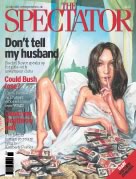
The cover shows a woman in bed, covered only by a sheet, surrounded by wads
of cash, with her fingers to her lips. "Don’t tell my husband," teases
the headline; inside the magazine, the story is run under the heading "Girls
just want to have funds". Here’s the standfirst:
The government would like to outlaw pyramid selling. Why? Rachel Royce has
joined Hearts, the girls-only investment scheme, and finds it good, clean
— and profitable — fun.
Yep, that’s right, the Spectator has now come out on the side of pyramid (or
Ponzi) schemes. It’s run a first-person account by a journalist who certainly
stands to make more from her article than the £375 ($611) she says she’s
investing, although one wonders if she might not be telling a few porkies to
make the scheme sound more harmless than it actually is. She says at the beginning
that the £375 could generate "a return of £6,000", but
then later admits that she got "sponsored" to join, which means that
she only stands to double her money. Which either means she stands to gain at
most a return of £375, or means that she’s very bad indeed at sums.
All pyramid schemes work the same way. Basically, I persuade ten people to
give me a buck, which means I get $10. Each of those ten people then perusades
ten new people to give them a buck, meaning they get $10 too. And so
on down the line, until the number of people runs out. Normally the people at
the top get a slice of everybody’s action, not just those people directly below
them, which means that the number of people who actually gain from the scheme
is very small, especially since many of the people who invest at the beginning,
making money, keep that money in the scheme instead of taking it out. When the
scheme collapses – as all pyramid schemes eventually do – even some
of the initial investors lose everything.
Rachel Royce knows all this. "One of the scary Internet articles had pointed
out that each pyramid must increase by a factor of eight, so for everyone in
my line to get their money, we would need 4,096 people," she says. "Another
lurid article suggested that for 12 layers of a pyramid you would need eight
billion people — more than the population of the planet." Yet still
she believes, and still she manages to hold completely contradictory thoughts
at the same time. Here she is about halfway through the article:
The government is planning to introduce hefty fines, and even up to six months
in prison, for anyone indulging in this sort of pyramid-gambling practice.
But new legislation isn’t expected until 2005 as part of a new Gambling
Act. At the moment it’s not illegal in this country.
And here she is seven paragraphs later:
I may yet be able to dodge my obligation to part with £375 if the government
goes ahead and keeps its promise to ban the scheme. I think the threat of
a six-month prison sentence would be a good enough excuse to allow me to back
down gracefully and still show my face in the village.
None of this makes sense, of course, which is why it’s so jaw-droppingly amazing
that the Spectator should put it on the cover. One minute: "It’s
an upper-middle-class thing. In my neck of the woods it’s a horsey, upper-middle-class
thing. The women sign up, wait and buy a nice new horse." The next: "If
you are like me and pathetically poor, then you can opt to buy a smaller share
— in my case, an eighth of a heart." And here’s a real beaut: "I
studied Torli’s chart, which shows all the hearts with names, home and
mobile phone numbers. There were quite a few names on the chart that I already
knew: my Astanga Yoga teacher, for one. I felt that anyone who regularly meditates
on the power of Om couldn’t possibly break a sacred female bond of trust
and friendship." Yep, why trust mathematics when you can take financial
advice from your yoga teacher?
The key fallacy in that last quotation, of course, is that the pyramid scheme
will only collapse if its members "break a sacred female bond of trust
and friendship." But there’s no ill will necessary for a pyramid scheme
to collapse, although Royce’s hoping that she might be able to get out of coughing
up her £375 would seem to be less than perfectly trusting. All that’s
necessary is that the members run out of new recruits, and indeed that seems
to be what’s happening: now that they can’t find anybody else to pony up £3,000,
they’re reduced to finding suckers like Royce who might be able to afford £375.
It’s like a drug addict crawling the floor looking for any last crumbs to keep
the buzz going just that tiniest bit longer.
And the really depressing thing is that the whole save-our-scheme campaign
is wrapped up in rhetoric about female empowerment. Here’s the relevant bits:
The scheme I’ve invested in is known as Hearts, and it’s for
women only. It calls itself a ‘gifting scheme that benefits all women’.
Men aren’t allowed in because they’d ruin it with their incessant
cynicism and greed. They aren’t even supposed to know about it. That,
in a way, is the point.
Rich or poor, however, these women are responsible for their own actions.
That in a way is what this little scam is all about: allowing women the responsibility
to make financial decisions and giving them the rather glorious feeling of
naughty financial independence.
I’m quite looking forward to upgrading my horse for something that doesn’t
try to buck me off every time I sit on it. And my boyfriend would never notice
— as far as he’s concerned, Hearts isn’t the only pastime
that’s strictly for the girls.
"My boyfriend," it turns
out, is Rod Liddle, the editor of Radio Four’s Today programme, and the
father of Royce’s two children. Royce herself is a television journalist. Could
it be that the whole article is basically an anti-anti-BBC slap at the woman
who wants to make pyramid schemes illegal? Note the way that Royce spins the
opposition:
Hearts is heartily disapproved of by boyfriends, partners, husbands, and
by the government, which wants to ban it. Ministers say that it doesn’t
work and women are being conned. They say it’s a form of pyramid selling
where those at the top do very well and those at the bottom lose their entire
investment. Tessa Jowell, taking a break from attacking the BBC, said a few
weeks ago, ‘I feel particularly concerned that many women have lost
thousands of pounds of hard-earned savings, and many more may lose out. There
is no doubting the misery these schemes can cause, and my advice to women
contemplating joining is simple: “Don’t do it.”’
Basically, the government (which hates BBC journalists), along with other killjoys
like husbands and boyfriends, wants to deprive women of "the rather glorious
feeling of naughty financial independence". How dare they? This is the
21st Century, and women should be making their own mistakes "having
a flutter on their friends".
Inevitably, when Hearts collapses, its members will blame the government, for
scaring off potential new investors. Many fewer people will blame the Spectator
for the inevitable financial catastrophes that will result. But they should.
Thankfully, Rod Liddle is the former editor of Today. He got the boot for writing a silly column in The Guardian that seemed incompatible with his Today role. Sadly, he’s still a Guardian columnist, given a page in G2 each week to write total drivel.
Could the Spectator perhaps be engaging in a new kind of ironic exercise, wherein the editors and the readers know the author is being made into a fool? Do women read the Spectator anyway? It’s always seemed to me more of a magazine for the husbands and boyfriends, in which case this piece would amount to a wake-up call.
ur comment on salingaros interview was nice,
l was in hearts it was brilliant for woman to save together.£3000 box get £24000 back or put £1half grand get £12ooo .l saw so many payouts it was exiting but to make it work you needed to bring two people in to keep the pyramid moving.girls started there own bussineses l bought a new car others had house extentions one lady went first class to australia.to see her family.B ut the downside tessa jowel decided to outlaw it girls got scared it collapsed.but boris johnson was right it was good.your allowed to give £3ooo away tax free that was the max you could put in 8girls come in put £3000 £24000 payout.my friends and me came in towards the end in Bath we put our money 750 each in weeks we had £6000 couldnt believe it then we put one and half grand back in thats when i got the 12000 for my car.it was just a saving scheme BUT like lots of others we lost money in the end cause jowell blocked it we even had bankers and solicitors in it shame.